
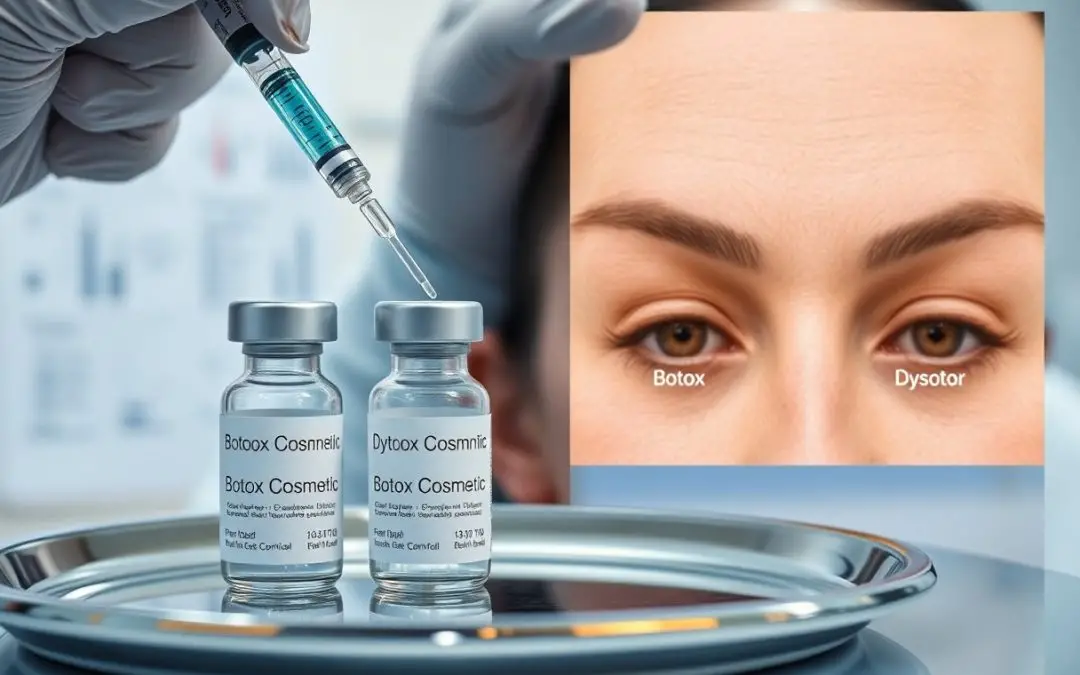
Botox and Dysport differ in formulation and diffusion; you should compare onset, dosing, duration, and risks to determine which delivers smoother skin and fits your aesthetic goals.
Understanding Dysport: The Science of AbobotulinumtoxinA
Dysport delivers abobotulinumtoxinA to targeted muscles, reducing activity to smooth dynamic wrinkles. You’ll notice onset within days, with effects shaped by dose, injection pattern, and muscle strength.
Mechanism of Action for Muscle Relaxation
You receive tiny injections that block acetylcholine release at the neuromuscular junction, causing temporary muscle relaxation and reducing dynamic lines while preserving adjacent muscle function.
Molecular Structure and Diffusion Characteristics
Molecular makeup of Dysport includes distinct protein complexes and accessory proteins that influence diffusion and onset, so you and your provider plan injection spacing and dosage accordingly.
Research indicates Dysport’s smaller complex size and specific accessory proteins can permit wider peripheral spread than some other formulations, so your clinician often adjusts dilution, injection points, and unit conversion to control diffusion, onset, and duration for the treatment area.
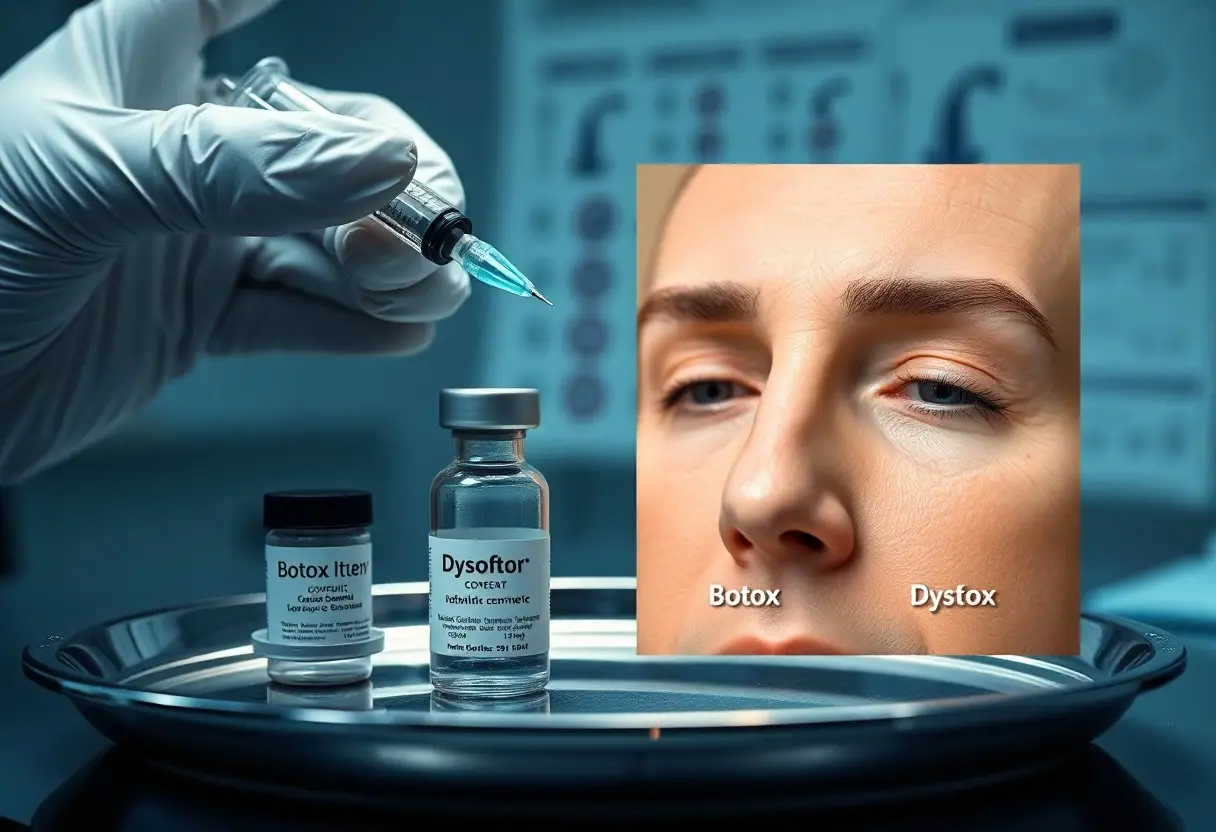
Botox Cosmetic: The Industry Standard for Neuromodulators
Botox Cosmetic remains the industry benchmark you rely on for consistent wrinkle reduction and predictable duration, giving you smoother skin with established safety data and widespread clinical experience.
OnabotulinumtoxinA Composition
OnabotulinumtoxinA combines the active neurotoxin with stabilizing proteins so you receive precise muscle relaxation at low doses, minimizing spread while maintaining effectiveness.
Precision and Targeted Application Benefits
Targeted injections allow you to smooth dynamic lines while preserving natural expression, reducing nearby muscle involvement and shortening recovery time compared with diffuse treatments.
Clinicians tailor injection patterns so you get individualized dosing, balancing onset speed and duration while addressing asymmetry and your aesthetic goals for a refined, natural result.
Head-to-Head Comparison: Potency and Dilution
Comparison shows Dysport is formulated with higher dilution, giving broader diffusion, while Botox Cosmetic is more concentrated; you’ll often need a higher unit count of Dysport to match Botox’s effect.
Potency & Dilution at a Glance
| Dysport | Botox Cosmetic |
|---|---|
| More diluted; you may notice wider spread and need more units. | More concentrated; you’ll get a localized effect with fewer units. |
| Typical vial units larger; conversion often ~2.5-3:1 to Botox. | Standardized units per vial; used as the dosing reference in many studies. |
Understanding the Unit Ratio Differences
Units between products aren’t interchangeable; you should expect roughly a 2.5-3:1 Dysport-to-Botox ratio, and your provider will adjust doses for the treated area and response.
Onset of Action: How Quickly Results Appear
Speed of onset differs: you may see Dysport improvement in 2-3 days, while Botox often takes 3-7 days, so timing can influence which product you choose.
Clinical evidence and practice show Dysport can produce measurable muscle relaxation within 24-72 hours and often peaks near two weeks; Botox commonly becomes noticeable by day 3-7 with a similar peak, but your muscle mass, injection technique, dose, and metabolism will affect exact timing and durability, so discuss expected timelines with your injector.
Treatment Areas and Clinical Suitability
Treatment areas shape suitability: you may favor Dysport for broader forehead involvement due to greater diffusion, while Botox gives you more precision for isolated muscles like the glabella or delicate periocular zones.
Addressing Glabellar Lines and Forehead Furrows
When addressing glabellar lines and forehead furrows, you and your provider balance diffusion with control; Dysport can smooth wider furrows, whereas Botox targets corrugator and frontalis muscles more selectively.
Comparing Efficacy for Crow’s Feet and Fine Lines
Crow’s feet and fine lines respond differently; you may notice Botox provides crisper smoothing around the eyes, while Dysport can be equally effective depending on injection technique and unit conversion.
Treatment Areas Comparison
| Area | Advice for you |
|---|---|
| Glabella | Botox often offers targeted control for you |
| Forehead | Dysport may smooth wider areas for you |
| Crow’s feet | Botox gives precise orbital lift for you |
| Fine lines | Either can work depending on technique for you |
Clinical choices depend on dosing and anatomy: you often need higher Dysport units for the same effect, injection placement influences outcomes, and both products deliver similar duration when used appropriately.
Crow’s Feet: Practical Differences
| Factor | What you should expect |
|---|---|
| Onset | Dysport may act slightly faster for you |
| Duration | Both last several months with proper dosing for you |
| Precision | Botox offers finer control around the eye for you |
| Dose | You’ll need more Dysport units to match Botox effect |
Longevity and Maintenance of Results
Results from Dysport and Botox vary by dose, injection site, and your metabolism, so you’ll likely need periodic touch-ups; maintenance visits typically fall between every three and six months depending on your response.
Expected Duration of Smoothing Effects
Most people notice Dysport’s smoothing within days and effects often last about 3-4 months, while Botox Cosmetic commonly endures closer to 3-6 months depending on dose and treated area, so you should plan follow-ups based on how your lines respond.
Optimal Treatment Intervals for Sustained Youthfulness
Scheduling treatments every 3-4 months maintains smoother skin for many, but you and your provider can adjust intervals based on response, activity level, and aesthetic goals to avoid overtreatment.
Your optimal interval depends on how quickly the toxin wears off, which muscles are treated, and prior dosing; some patients extend to six months after several sessions while others need touch-ups at three months-work with your injector to tailor dose and timing, monitor results, and lengthen spacing over time if line softening persists without frequent reinjection.
Safety Profiles and Potential Side Effects
Both Dysport and Botox share low serious-adverse-event rates when administered by trained clinicians, though subtle differences in onset and spread influence side-effect patterns; you may experience temporary bruising, headache, or droop, and rare systemic reactions require prompt medical attention.
Common Injection Site Reactions
Expect mild, short-lived reactions such as redness, swelling, tenderness, and small bruises at injection sites; you can usually manage these with ice and over-the-counter analgesics, and they typically resolve within days.
Contraindications and Patient Eligibility
Avoid treatment if you are pregnant, breastfeeding, have an active infection at the injection site, or have known hypersensitivity to botulinum toxin components; discuss neuromuscular disorders and certain medications with your provider.
You should disclose full medical history, including neuromuscular disorders (e.g., myasthenia gravis), prior adverse reactions to botulinum products, current anticoagulant or antibiotic use, and pregnancy or breastfeeding status so your clinician can assess risk, adjust dosing, or recommend safer alternatives when necessary.
Conclusion
Hence you should weigh Dysport’s faster diffusion and cost-effectiveness against Botox Cosmetic’s precision and typically longer duration; consult a qualified clinician to match treatment to your muscle patterns and aesthetic goals for smoother, natural-looking results.