
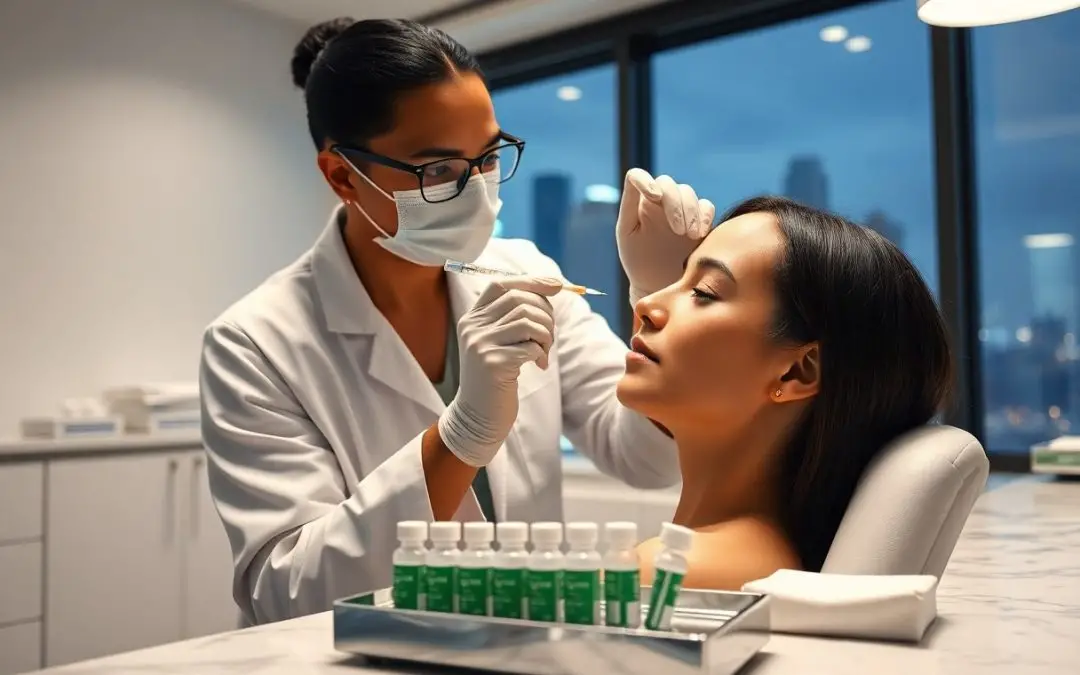
Over time, you may seek subtle facial refreshment without appearing altered. Manhattan Botox treatments, performed by experienced injectors, use targeted neuromodulator injections to smooth lines, preserve expression, and customize dosing to your anatomy, ensuring refined natural outcomes while minimizing downtime.
Understanding Botox
What is Botox?
You’ll see Botox referred to as onabotulinumtoxinA, a purified botulinum toxin type A FDA‑approved for cosmetic use (2002 for glabellar lines). It’s injected in tiny units to relax targeted facial muscles, softening dynamic wrinkles with minimal downtime; most patients notice effects within 3-7 days, peak around two weeks, and expect results for about 3-4 months.
How Does Botox Work?
You experience muscle relaxation because Botox blocks acetylcholine release at the neuromuscular junction, interrupting nerve signals and reducing muscle contraction. For example, treating glabellar lines commonly uses about 20 units (five 4‑unit injections) to weaken the corrugator and procerus muscles, visibly softening vertical frown lines within 3-14 days.
Dose, injection site and your muscle mass determine outcomes: forehead treatments typically range 8-30 units, crow’s feet 6-15 units per side, and glabella ~20 units. Your metabolism, activity level and prior treatments influence duration-smokers and those with stronger muscles often wear off faster. Adverse effects like eyelid ptosis arise from unwanted diffusion, so precise depth, angulation and conservative dosing by an experienced injector reduce risks and improve natural results.
The Benefits of Botox for a Natural Look
Minimizing Wrinkles and Fine Lines
By using precise neuromodulation, you can soften dynamic wrinkles-those that appear with expression-within 3-5 days, with peak smoothing at about two weeks and effects lasting roughly 3-4 months. Small, targeted doses (commonly 10-30 units depending on area) reduce muscle overactivity to flatten creases without freezing your face, so your forehead, glabella, and crow’s feet look smoother while your natural movement remains intact.
Enhancing Facial Symmetry
Targeted injections let you address asymmetries like an uneven brow, crooked smile, or unilateral jaw tension by selectively weakening overactive muscles; typical microdoses of 2-6 units per point produce balanced movement over 1-2 weeks, often avoiding the need for more invasive procedures and giving subtle, predictable alignment.
Assessment-driven planning matters: clinicians use neuromuscular mapping, photos, and millimeter measurements to guide placement, and small adjustments-often 1-3 mm of positional change-are achievable. You may combine Botox with fillers for volumetric imbalance, and routine touch-ups every 3-4 months maintain symmetry as muscle patterns evolve.
Choosing a Skilled Injector in Manhattan
You should prioritize an injector who combines board-level credentials with a documented Manhattan track record: look for ABMS board certification, 3-5+ years focused on facial injectables, and a portfolio showing subtle, natural outcomes. Many reputable NYC practices publish before/after galleries and patient satisfaction scores; clinics that perform 500+ toxin treatments annually will have the procedural consistency and complication protocols you want.
Qualifications and Experience
You want a provider who is board-certified in dermatology, plastic surgery, or ENT with focused training in facial anatomy and at least several hundred Botox treatments performed. Seek clinicians who’ve given talks or published case series, since peer-reviewed experience often correlates with refined technique. Also verify in-office emergency protocols and malpractice insurance for additional assurance.
Importance of Personalized Treatment Plans
You should expect a tailored plan that maps muscle strength, asymmetry, and aesthetic goals into specific dosing – for example, 20 units for glabellar lines is common, while crow’s feet often require 6-12 units per side. Good plans note prior neurotoxin history, choice of product (Botox vs. Dysport dosing ratio ~1:2.5-3), and schedule a 2‑week follow-up for adjustments.
In practice, personalized care means the injector may use micro-Botox with 10-30 units dispersed intradermally for pore/sweat control, or concentrated injections of 16-24 units to relax a strong corrugator muscle. You should receive a clear mapping of injection sites, expected onset (2-14 days), duration (typically 3-4 months), and a documented follow-up plan; many Manhattan clinics report touch-up needs in roughly 10-20% of cases at the 2‑week visit.
Preparing for Your Botox Appointment
Schedule your consultation 1-2 weeks before treatment to review medical history, prior Botox doses, and any medications that thin blood; bring a list of prescriptions and supplements. You should plan for a 30-45 minute visit including photos and consent. Avoid heavy alcohol 24-48 hours beforehand and intense exercise the day of. If you’re managing chronic conditions or taking anticoagulants, coordinate with your prescribing physician to adjust timing safely.
Pre-Treatment Guidelines
You should stop NSAIDs and aspirin 48-72 hours before the appointment if medically appropriate, and pause supplements like fish oil or vitamin E 5-7 days prior to lower bruising risk. Expect to arrive with a clean face and no makeup so the injector can assess natural muscle movement. If you had recent facial procedures, defer Botox for 1-2 weeks or follow practitioner-specific timing to avoid interference with healing.
What to Expect During the Procedure
You’ll be seated and the provider will mark injection sites based on your anatomy and movement patterns; topical numbing or ice is optional. Typical treatment time runs 10-20 minutes using fine 30-33 gauge needles. Common dosing examples: forehead 10-20 units, glabellar 15-25 units, crow’s feet 5-15 units per side. After injections you may resume light activity but skip vigorous exercise for 24 hours.
Expect mild discomfort described as quick pinpricks and brief pressure; many patients rate pain 1-3/10. Injection patterns vary-glabellar often uses 3-5 points, forehead 4-6-while “micro‑Botox” employs smaller aliquots across more sites for texture improvement. Onset typically appears at 3-7 days, peaks by two weeks, and results commonly last 3-4 months; a patient example: 20 units forehead + 20 units glabellar showed noticeable softening at day 5 and maintained benefit for ~16 weeks.
Aftercare for Optimal Results
Immediate Post-Treatment Care
Within the first 24 hours, avoid rubbing or massaging treated areas and stay upright for at least four hours. Apply ice for 10 minutes every hour to reduce swelling; expect mild bruising in about 10-20% of patients that typically fades in 7-10 days. Skip intense exercise and saunas for 24-48 hours. You’ll notice onset in 3-5 days with peak effect at 10-14 days; contact your injector if you see eyelid droop or asymmetric movement.
Long-Term Maintenance Tips
Plan maintenance sessions every 3-4 months to sustain smoothness; most neuromodulator effects last about 3-4 months depending on muscle strength. Photograph your face monthly to track changes and decide when to return. Combine treatments with daily SPF 30+, topical retinoids, and occasional laser or peels to prolong outcomes. Many injectors use microdoses (2-4 units per site) for subtle, natural maintenance; consult your injector about tailoring intervals and units to your lifestyle.
- Keep a consistent SPF 30+ routine to protect results from photodamage.
- Use monthly photos taken in the same light and expression to time treatments precisely.
- Knowing you can schedule a 2-week follow-up for touch-ups if asymmetry or under-correction appears.
In practice, dosing varies: glabellar injections commonly use 15-25 units, forehead 8-20 units, and crow’s feet about 6-12 units per side, with total sessions often ranging 20-60 units based on muscle mass and goals. You should plan a 2-week check for adjustments and a 12-week reassessment to set the next treatment. If you prefer a very natural look, microdosing (1-3 units per point) preserves expression while smoothing lines; track response and adjust units rather than shortening intervals.
- Schedule follow-ups at 2 weeks and reassess at 12 weeks to optimize dosing.
- Coordinate neuromodulator treatments with fillers or skin-resurfacing for comprehensive rejuvenation.
- Knowing you can modify dose based on factors like metabolic rate, activity level, or occupational facial use.
Cost and Value of Botox Treatments
Pricing Factors in Manhattan
You’ll encounter wide price ranges in Manhattan, commonly $10-$20 per unit; typical forehead and frown line treatments run $300-$1,200 depending on units and technique. Clinic reputation, injector training, and neighborhood rent push prices up, while lunchtime clinics can be cheaper. Product choice (onabotulinumtoxinA versus biosimilars) and whether you need microdosing or broader coverage also matter. After comparing itemized estimates, verify follow-up policies and dilution practices.
- Units required for targeted muscles
- Injector experience and certifications
- Product brand and vial cost
- Clinic location and overhead
- Included follow-up or touch-up visits
Assessing the Value of Botox
You should weigh longevity (3-4 months typical), natural appearance, and total annual spend: a 60-unit treatment at $12/unit costs $720 and averages $180/month if repeated quarterly. Choose an experienced injector to minimize complications and optimize placement; fewer units with strategic dosing often produce better, subtler results than heavy-handed approaches. Consider package pricing and maintenance plans when evaluating cost-effectiveness.
You should evaluate long-term value by tracking durability, side-effect rates, and measurable outcomes: Botox onset is typically 3-7 days and effects last about 3-4 months, occasionally up to 6 months in some muscles. For budgeting, a common plan-60 units every 3-4 months-means 3-4 treatments yearly; at $10-$14/unit that’s $600-$840 per session or roughly $1,800-$3,360 annually. Ask about follow-up touch-ups, photo documentation, and conservative dosing to quantify results and protect your investment.
Conclusion
On the whole, Manhattan Botox for Refined Natural Outcomes offers precise, personalized treatments that enhance your features while preserving natural expression. Working with experienced injectors in a sophisticated urban setting, you can expect careful assessment, subtle dosing, and follow-up that align results with your goals. This approach minimizes downtime and highlights your best features, letting you present a refreshed, authentic appearance with confidence.