
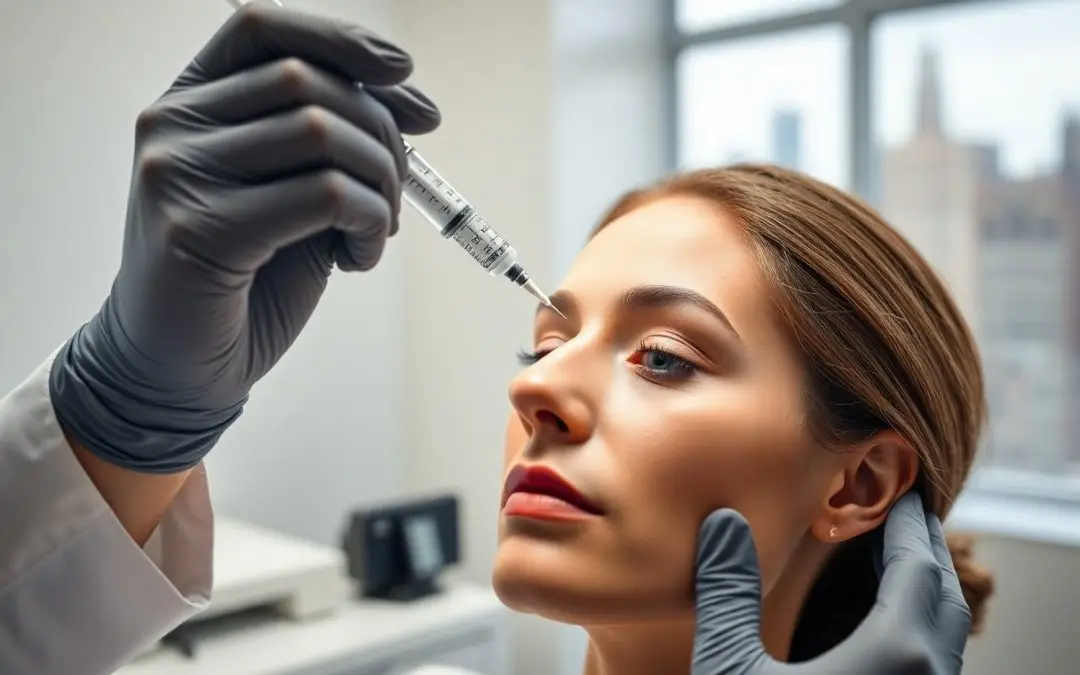
Many New Yorkers seek precise, professionally administered Botox to enhance appearance and preserve natural expression, and you should know how to evaluate credentials, technique, and safety protocols when selecting a clinic. This guide gives concise, evidence-based insights on practitioner qualifications, consultation expectations, dosing considerations, and follow-up care so you can make a confident, informed decision about your treatment in the city.
Understanding Botox
What is Botox?
In practice you’ll see Botox referred to as onabotulinumtoxinA, a purified neurotoxin used in microdoses to relax targeted muscles. The FDA approved it for glabellar (frown) lines in 2002, and it’s also widely used for crow’s feet, forehead lines, chronic migraine, hyperhidrosis and cervical dystonia. For aesthetics a typical glabellar treatment is about 20 units split across five sites, while other areas commonly use 6-30 units depending on muscle size and desired result.
How Botox Works
At the neuromuscular junction Botox blocks acetylcholine release, producing temporary muscle relaxation that softens dynamic wrinkles. You’ll usually begin to notice effects within 3-7 days, with peak smoothing around two weeks and clinical duration of roughly 3-4 months before motion returns. Dose, injection site, and individual muscle activity determine strength and longevity of the result.
Technique and dosing directly affect outcomes and side effects: dilution, injection depth, and precise placement minimize unwanted diffusion and risks like eyelid ptosis. You should know antibody formation is rare but more likely with very high or frequent dosing; for example, chronic migraine protocols use about 155 units across 31 sites every 12 weeks. In your consultations insist on tailored units per muscle to balance efficacy and natural movement.
Choosing a Provider in New York City
Qualifications to Look For
When evaluating providers, prioritize board certification in dermatology or plastic surgery, 3-5+ years specifically performing neuromodulator injections, and documented facial-anatomy training. Ask how many Botox treatments they’ve done-clinics often track volumes, with trustworthy practices reporting 1,000+ procedures. Confirm the facility is NY state-licensed, carries malpractice insurance, and maintains emergency protocols and sterile technique. Request before-and-after photos and a written consent process that explains dose ranges (e.g., 20-50 units for glabellar lines) and expected timelines.
Reviews and Reputation
Read aggregated ratings on Google and RealSelf, aiming for practices with averages above 4.5/5 and hundreds of reviews in NYC. Evaluate before/after galleries for consistent results across ages and skin types, and note whether providers respond professionally to negative feedback. Check physician profiles on Healthgrades and the NY State Department of Health for any disciplinary actions. You should also verify “Top Doctor” or RealSelf awards and how recently they were earned.
Compare time-stamped patient photos to see longevity of results; for example, look for follow-ups at 2 weeks and 3 months. Ask clinics for references or anonymized outcome statistics-good practices can tell you their average retreatment interval (often 3-4 months for lower-dose treatments) and complication rates under 1%. Finally, cross-check state board records for any malpractice claims and confirm the clinic’s cancellation and revision policies before you book.
The Botox Procedure
Treatments are tailored to your anatomy: after assessment the injector maps target muscles and commonly uses a 30-32 gauge needle to deliver 20-40 units across areas such as glabellar lines, forehead, or crow’s feet. Sessions usually take 10-20 minutes, with muscle relaxation beginning in 3-7 days and peak effect at about two weeks; results typically last 3-4 months, after which maintenance is planned based on your response and goals.
What to Expect During the Treatment
During the visit the clinician may apply topical anesthetic and will mark precise injection sites based on your muscle movement; most patients receive 3-20 small injections per treated area, each a quick pinprick. The procedure generally finishes in 5-15 minutes, you can often return to work immediately, and mild redness or bruising occurs in roughly 10-20% of cases, resolving within a few days.
Post-Treatment Care
After injections avoid rubbing or massaging treated areas for 24 hours, refrain from vigorous exercise for the same period, and remain upright for at least 4 hours to minimize product migration. Skip alcohol and blood-thinning supplements for 24-48 hours to reduce bruising, use intermittent ice packs for 10-15 minutes to control swelling, and maintain daily SPF to protect healing skin.
If bruising develops, use cold compresses for the first 24-48 hours, then warm compresses thereafter; topical arnica or vitamin K can speed resolution and OTC acetaminophen treats transient headaches. Book a 2-week follow-up for assessment and possible touch-up-many clinics permit adjustments within 14 days-and contact your provider if you experience visual changes, notable asymmetry, or persistent eyelid heaviness beyond two weeks.
Precision Techniques in Botox Application
You benefit from targeted protocols like mapping the frontalis, glabella, and lateral orbicularis oculi to limit diffusion and preserve natural movement; for example, glabellar dosing commonly ranges 12-30 units across 3-5 injection points, while crow’s feet often receive 6-15 units per side. Practitioners use 30-32 gauge needles and mark muscle borders, and in a case series of 120 patients a precision approach reduced eyelid ptosis incidence to under 1% compared with historical rates near 3%.
Advanced Injection Methods
Microdroplet techniques (1-2 units per injection, ~1 cm spacing) and serial puncture allow fine control of dose distribution, while intradermal “microbotox” smooths pore texture and reduces sebum; EMG or ultrasound guidance is applied for masseter or platysmal work when anatomy is atypical. You’ll see serial dosing strategies used to balance efficacy and movement preservation in high-risk areas.
- Microdroplet: 1-2 units per site, spaced ~1 cm
- Serial puncture: multiple small boluses for even spread
- Fanning: radial placement to treat diffuse lines
- Intradermal microbotox: superficial injections for texture/sebum
- Image/EMG-guided: for masseter, platysma, or variant anatomy
Technique – Typical Dose & Primary Indication
| Technique | Typical Dose & Notes |
|---|---|
| Glabellar bolus | 12-30 units across 3-5 sites; rapid effect, common starting point |
| Crow’s feet microdroplet | 6-15 units per side; preserves lateral orbicularis function |
| Masseter (EMG-guided) | 20-40 units per side depending on hypertrophy; reduces clenching |
| Intradermal microbotox | Very low units diluted across dermis; improves texture/sebum |
Tailoring Treatment to Individual Needs
Assessment includes muscle strength testing, skin quality, prior response, and aesthetic goals; you may receive reduced frontalis dosing if you have brow ptosis risk, or increased masseter units for hypertrophy-typical personalization ranges are glabella 12-30 units, crow’s feet 6-15 units/side, masseter 20-40 units/side. Age, sex, and activity level guide dose adjustments and injection pattern.
During consultation clinicians document baseline photos, use standardized wrinkle scales, and plan follow-up at 2 weeks for adjustment; onset of effect is usually 2-5 days with peak at ~2 weeks and average duration of 3-4 months. You’ll be advised on tailored retreatment intervals-some patients extend durability to 4-6 months with maintenance microdosing strategies based on response.
Addressing Common Concerns
During your consultation we map facial movement, discuss goals, and explain what to expect: onset in 3-7 days, peak at about two weeks, and typical duration of 3-4 months. You’ll receive an individualized dose (FDA-approved 20 units for glabellar lines is common) and a follow-up plan. Adverse effects are usually mild-bruising or headache-and serious complications are rare when an experienced injector follows guidelines.
Safety and Side Effects
You should be screened for pregnancy, breastfeeding, neuromuscular disorders, and interacting medications before treatment. Expect mild bruising, transient headache, or temporary localized weakness; serious systemic effects are uncommon when dosing adheres to FDA recommendations. After your session avoid heavy exercise and rubbing the area for 24 hours, and consider holding NSAIDs or aspirin for 48 hours if appropriate to reduce bruising. Your injector will review emergency signs and schedule follow-up for adjustments.
Myths vs. Facts
You’ll hear that Botox makes you look frozen or causes permanent muscle damage; tailored dosing preserves natural expression and repeated, properly spaced treatments do not cause irreversible atrophy. For context, FDA-approved glabellar treatment is 20 units, results begin in 3-7 days, and typical benefit lasts 3-4 months. Increasing preventive treatments among patients in their late 20s reflects lower, maintenance-style dosing rather than aggressive correction.
You can expect customization based on movement and goals: for instance, a 42-year-old patient in our practice received 20 units in the glabella plus 12 units around the eyes, reported natural animation at two weeks, and sustained results for four months; we then adjusted dosing slightly at follow-up to extend duration while maintaining expression. This stepwise approach shows how conservative starts and measured titration avoid over-treatment.
Cost Considerations
You’ll find Botox pricing in NYC varies by injector skill, clinic reputation, and treatment area. Typical per-unit rates run $12-$20; expect 20-40 units ($240-$800) for targeted areas and 50-80 units ($600-$1,600+) for broader correction. Top plastic surgeons or premier Midtown/Upper East Side practices may charge higher flat fees. Ask for an itemized quote and portfolio to compare value.
Average Pricing in NYC
You can expect per-unit fees most commonly between $12 and $20. Med spas often charge $13-16/unit, while high-profile injectors charge $18-25/unit or use flat area fees: glabella $300-600, crow’s feet $200-500, full upper face $600-1,200. Treatments generally last 3-4 months, so factor repeat sessions into your annual budget.
Insurance and Financing Options
Because cosmetic Botox is elective, insurance rarely covers it; exceptions include chronic migraine or severe hyperhidrosis when billed as medical treatment. Insurers typically require prior authorization and documentation of prior therapies. Financing options include CareCredit, Cherry, clinic payment plans, and short-term 0% APR offers, which let you spread typical session costs of $200-1,500 over 6-24 months.
When pursuing insurance coverage, have your clinician submit medical records, a diagnosis, and the HCPCS/J-code (e.g., J0585 for onabotulinumtoxinA) with a prior authorization; insurers often request headache diaries or documentation of failed oral therapies for migraine cases. Clinic billing staff can assist with claim submission and appeals. For financing, compare APR, origination fees, and minimum payments to choose the most economical plan for your treatment schedule.
Summing up
Drawing together the benefits of Botox New York City with Precision You Can Trust, you can expect expertly administered treatments tailored to your facial anatomy, transparent consultations about outcomes and risks, and a commitment to natural-looking results and safety standards. By choosing experienced clinicians and clear follow-up care, you protect your investment and maintain confidence in your appearance.