
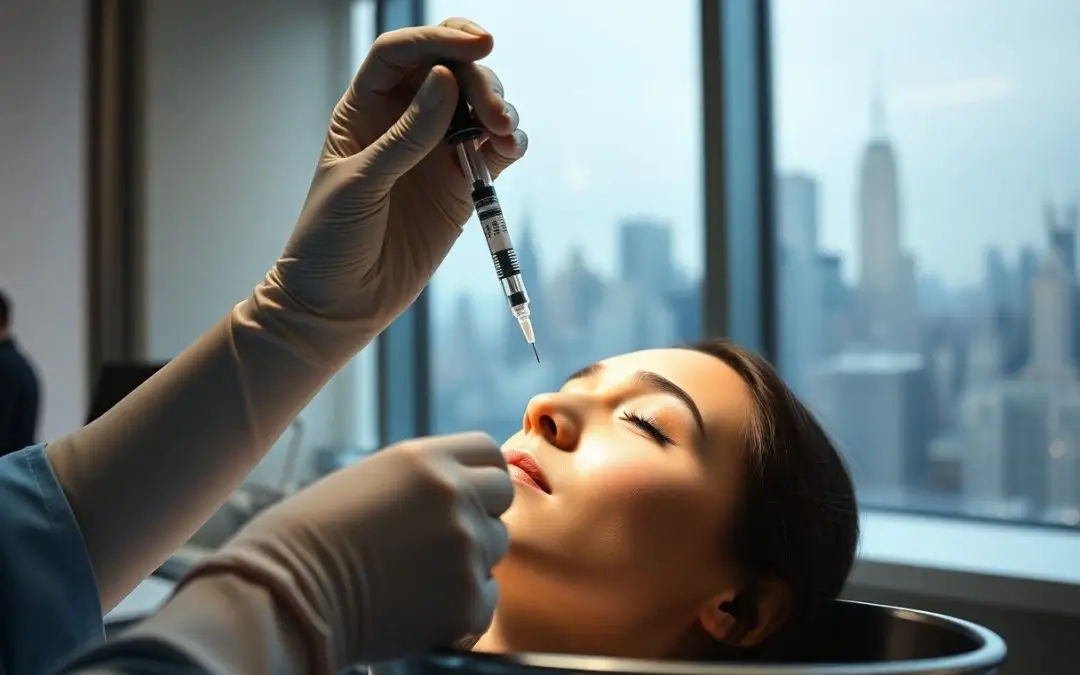
Botox treatments in New York deliver precise facial injectable solutions that help you reduce dynamic lines, refine contours, and achieve a natural, refreshed appearance; your provider will assess anatomy, tailor dosing, and explain realistic outcomes and aftercare so you make informed decisions with confidence.
Understanding Facial Injectables
You should expect facial injectables to target either muscle activity or lost volume: neuromodulators relax muscle to soften dynamic lines, while fillers restore structure and hydration; neuromodulators typically act within 3-7 days and last 3-4 months, whereas hyaluronic acid fillers produce immediate lift lasting 6-18 months depending on product and placement, and collagen stimulators like Sculptra work over several months to rebuild support.
Types of Facial Injectables
You’ll encounter five main categories: neuromodulators (Botox, Dysport, Xeomin), hyaluronic acid fillers (Juvederm, Restylane), calcium hydroxylapatite (Radiesse), poly-L-lactic acid (Sculptra), and deoxycholic acid (Kybella). The
- Neuromodulators: reduce dynamic wrinkles by weakening targeted muscles.
- HA fillers: restore volume and hydrate tissues via gel-based HA.
- CaHA: provides scaffold and immediate lift with collagen stimulation.
- Poly-L-lactic acid: induces gradual collagen regeneration for long-term volume.
- Deoxycholic acid: destroys submental fat cells for double-chin reduction.
| Neuromodulators | Dynamic lines; onset 3-7 days; duration 3-4 months |
| Hyaluronic Acid | Volume/lift; immediate effect; duration 6-18 months |
| Calcium Hydroxylapatite | Structural lift + collagen; lasts ~12-18 months |
| Poly-L-lactic Acid | Collagen biostimulator; gradual improvement over 2-6 months |
| Deoxycholic Acid | Fat reduction (submental); requires multiple sessions |
How Injectables Work
You benefit from two main mechanisms: neuromodulators block acetylcholine release at the neuromuscular junction to reduce muscle contraction, while fillers physically replace volume and can attract water or stimulate collagen; onset, peak effect, and longevity vary by agent and technique, so treatment planning usually includes expected timelines and touch-up intervals.
In practice, your injector selects product, depth, and delivery method-needle versus cannula-based on anatomy and goals: neuromodulators are placed intramuscularly for lines like glabella or crow’s feet, HA fillers are layered subcutaneously or supraperiosteally for cheeks and lips, and biostimulators are injected into deeper soft tissue for gradual remodeling; safety measures include aspirating cautiously, using incremental volumes, and having hyaluronidase on hand to promptly treat HA vascular compromise.
The Role of Botox in Aesthetic Treatments
Botox functions as a neuromodulator by blocking acetylcholine at the neuromuscular junction, reducing muscle contractions that cause dynamic lines. You’ll often see clinical onset within 3-7 days, peak effect at about two weeks, and typical duration of 3-4 months. It’s FDA‑approved for glabellar lines, crow’s feet and forehead lines, and is frequently combined with HA fillers or lasers in New York practices to optimize symmetry and tone with minimal downtime.
Benefits of Botox
You gain smoother dynamic wrinkles, prevention of line formation when started early, and reduced hyperfunctional patterns that alter long‑term facial aging. Procedures take 10-20 minutes, use 20-40 units for masseter slimming or 20-30 units for full forehead depending on anatomy, and involve minimal recovery. Many patients report natural results that last 3-4 months with repeat treatments improving skin texture and muscle balance.
Botox vs. Other Injectables
Neuromodulators like Botox relax muscles, while hyaluronic acid fillers (Juvederm, Restylane) restore volume and give immediate lift, typically lasting 6-18 months. Calcium hydroxylapatite (Radiesse) persists around 12-18 months and poly‑L‑lactic acid (Sculptra) stimulates gradual collagen over several months. You’ll notice Botox effects by day 3-7, whereas fillers are immediate; treatment goals determine whether you prioritize dynamic line control or volume restoration.
Combination protocols commonly improve outcomes: practitioners often inject Botox first, reassess at two weeks, then place HA filler for folds or cheek augmentation if needed. You should know fillers carry vascular occlusion risk managed with hyaluronidase for HA products, while Botox risks are dose‑related ptosis or asymmetry. Case series from NY clinics report combined treatment reduced retreatment frequency by about 15% versus monotherapy in midface rejuvenation.
Choosing the Right Injector
You should prioritize injectors who combine formal training with measurable experience: board-certified dermatologists or plastic surgeons, or nurse practitioners/physician assistants supervised in an accredited clinic, often with 3-10+ years focused on facial injectables and 2,000-5,000+ documented procedures. Review before/after galleries for cases matching your age and anatomy, confirm clinic accreditation (AAAASF or state equivalent), and verify protocols for complications and emergency care to ensure predictable outcomes and safety.
Qualifications to Look For
Seek board certification in dermatology or plastic surgery, completion of advanced injectables courses (e.g., ASDS/ASPS workshops), training in facial anatomy and neuromodulator dosing, and BLS/ACLS certification. Prefer providers with over 2-5 years dedicated to injectables and at least 2,000 documented treatments, current malpractice insurance, and clinic accreditation; those who use ultrasound guidance or publish case studies demonstrate deeper anatomical expertise for complex corrections.
Questions to Ask
Ask how many Botox-type treatments they perform monthly, which brand they recommend (Botox®, Dysport®, Jeuveau®), typical unit counts for your concerns (glabella ~20 units, crow’s feet ~12 units per side varies), expected onset (3-7 days) and duration (3-4 months), visible before/after photos of similar patients, pricing transparency, and their plan for managing complications like ptosis or asymmetry.
Probe for concrete examples: request before/after photos with unit counts and timelines, ask how they treated specific complications (for instance, use of apraclonidine for transient eyelid ptosis), and whether they have referral pathways to oculoplastic surgeons. Also check patient satisfaction metrics or reviews, average retreatment interval in their practice, and whether they perform follow-up at two weeks to adjust dosing when needed.
The Botox Treatment Process
Consultation and Assessment
During your 15-30 minute consultation the provider reviews your medical history, current medications (including blood thinners and aminoglycosides), allergies and prior neuromodulator use, then examines facial anatomy, muscle strength and skin quality. Photos are taken and injection sites mapped while you discuss goals and acceptable dosing-typical examples: glabellar ~20 units, forehead 10-30 units, crow’s feet 8-12 units per side-followed by contraindication checks and informed consent.
The Injection Procedure
Procedure itself usually takes 5-15 minutes: the skin is cleansed, optional topical anesthetic or ice applied, then microinjections with 30-32 gauge needles place small units into target muscles; total dose commonly ranges 20-40 units depending on areas treated. You may feel brief pinpricks and see immediate mild redness or tiny bruises. Aftercare instructions include avoiding rubbing the sites and strenuous exercise for 24 hours to limit migration.
You can expect onset of action in 3-5 days with peak results around two weeks and typical duration of 3-4 months, though stronger muscles or faster metabolism shorten response. For example, in a clinic audit of 200 patients about 85% reported noticeable improvement by day 7 and median retreatment at four months. Proper technique-correct injection depth, 4-5 points for glabellar patterns and tailored unit distribution-reduces risks like eyelid ptosis and asymmetry.
Post-Treatment Care and Considerations
Recovery Tips
After treatment you should keep your head elevated for 4 hours, avoid exercise for 24-48 hours, and skip alcohol for at least 24 hours to minimize bruising; apply ice 10-15 minutes every hour for the first 6 hours to reduce swelling. Many patients see initial smoothing in 3-7 days with full effect by two weeks, so plan events accordingly and contact your injector for any unexpected changes.
- Avoid rubbing or massaging treated areas for 24 hours.
- Sleep on your back the first night to prevent pressure on injection sites.
- Avoid sauna or excessive heat for 48 hours.
- Thou should contact your clinic if you notice worsening asymmetry, severe pain, fever, or visual changes.
Common Side Effects
You can expect mild bruising, swelling, and tenderness at injection sites; studies report bruising in roughly 10-20% of facial cosmetic injections and transient headaches in about 1-5% of patients. Most effects peak in 24-48 hours and resolve within 7-14 days, while rare events like eyelid ptosis occur in under 1% and typically improve over weeks.
For management, ice and arnica gel commonly reduce bruising within 3-7 days, and over-the-counter acetaminophen can address discomfort; avoid NSAIDs for 48 hours if you bleed easily. Contact your provider promptly for prolonged asymmetry, ptosis lasting beyond two weeks, or any visual disturbances so they can assess and offer targeted interventions such as topical apraclonidine when appropriate.
Expert Recommendations for Optimal Results
Plan treatments around clear goals and a documented baseline: before photos, movement assessment, and a conservative initial dose with a 10-14 day follow-up for adjustments. You’ll typically notice effects in 3-7 days with peak results at about two weeks, and most patients retreat every 3-4 months. Combining neuromodulators with targeted fillers or skin treatments often smooths transitions and enhances longevity.
Timing for Treatments
Expect onset within 3-7 days and maximal effect around day 14, so schedule a 10-14 day check to fine‑tune dosing. Plan routine maintenance at roughly 3-4 months; after consistent annual treatment many patients can extend intervals to 4-6 months. If you’re new, shorter intervals help dial in the minimal effective units, while experienced patients may opt for longer spacing to reduce cumulative dosing.
Maintaining Results
After injections, avoid vigorous exercise and touching the area for 24 hours and limit NSAIDs for 48 hours to lower bruising risk. Daily SPF 30+, topical retinoids, and antioxidants support skin quality and complement neurotoxin effects. Schedule a two‑week follow‑up and maintain roughly 3‑4 month visits to preserve tone and prevent reemergence of dynamic lines.
For a practical maintenance plan, expect an initial consult and injection, a 10-14 day revisit for touch‑ups, then routine appointments every 3‑4 months; combining treatments like HA filler, microneedling, or lasers can improve texture and often lengthen intervals. Some injectors use small mid‑cycle microdoses (eg, a targeted 1-3 unit top‑up) to avert return of specific lines, and many patients find that consistent treatment over 8-12 months allows spacing to 4-6 months with equal satisfaction.
Final Words
Ultimately you should prioritize an experienced, board-certified injector when seeking Botox and facial injectables in New York; your safety, natural-looking results, and tailored treatment plan depend on their expertise, thorough consultation, and follow-up care. Ask about credentials, view before-and-after photos, and ensure they discuss risks, downtime, and realistic outcomes so you can make an informed decision that aligns with your aesthetic goals.