
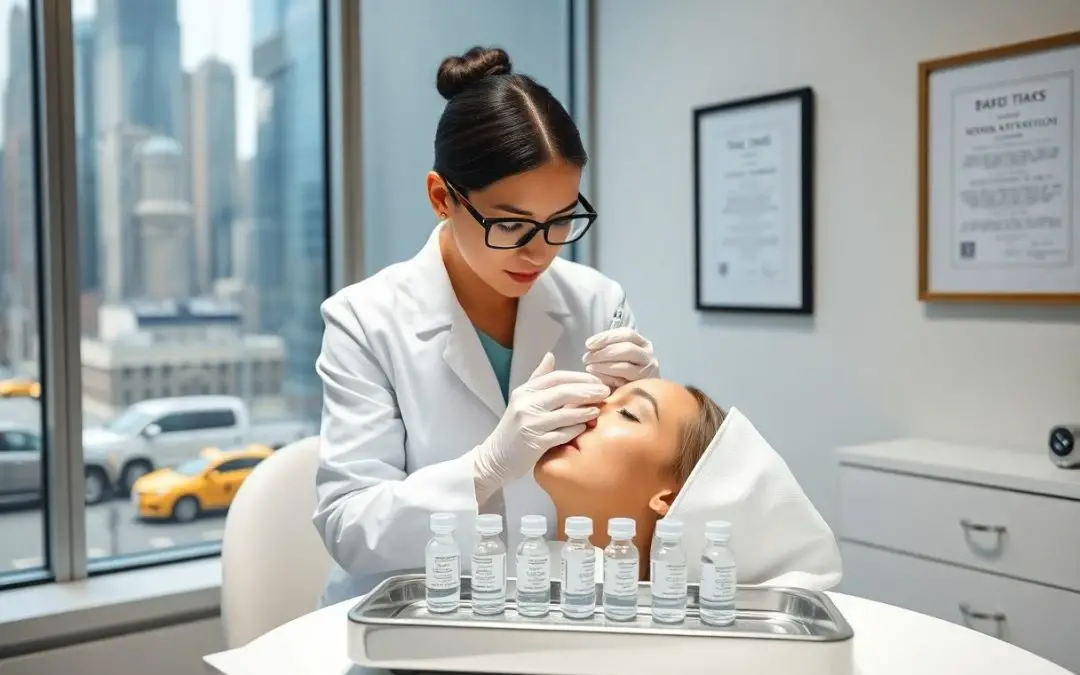
NewYork clinics offer discreet, medically supervised Botox services that prioritize subtle enhancement and natural expression; when you choose experienced injectors, your treatment plan is tailored to your facial anatomy and aesthetic goals, ensuring safe dosing, precise placement, and realistic results while minimizing downtime so you can maintain confidence in your appearance and daily routine.
Understanding Botox
What is Botox?
Botox is onabotulinumtoxinA, a purified botulinum toxin type A approved by the FDA for cosmetic use (glabellar lines, 2002) and several medical indications. You receive microdoses injected into targeted muscles-commonly corrugator, procerus, frontalis, or orbicularis oculi-to soften dynamic lines; for example, glabellar treatments often total around 20 units, while crow’s feet typically use 6-15 units per side.
How Botox Works
At the neuromuscular junction, Botox prevents acetylcholine release from presynaptic terminals, producing localized muscle relaxation that reduces dynamic wrinkles. You usually see onset in 3-7 days, peak effects by two weeks, and typical duration of 3-4 months. Providers adjust units and injection points based on muscle strength and facial anatomy to preserve natural movement.
Diffusion, dose, and injection technique determine both efficacy and side effects; for example, using higher volume can increase spread, while precise placement limits it. You should expect variability-stronger muscles or faster metabolism may shorten effect, and rare complications like eyelid ptosis occur in roughly 1-3% of periocular treatments. Antibody-mediated resistance is uncommon, generally reported at under 1% with standard cosmetic dosing.
Choosing a Qualified Provider
Importance of Professional Care
Choosing a skilled injector reduces risks like eyelid ptosis, asymmetry, and prolonged bruising; when administered by a board-certified physician or an experienced NP/PA, complications are uncommon and typically resolve within 1-2 weeks. You’ll receive tailored dosing-often 20-40 units depending on treatment areas-plus follow-up care and documented outcomes, which together lower revision rates and protect both your safety and aesthetic goals.
Credentials to Look For
Seek board certification in dermatology, plastic surgery, or facial plastics, a valid New York state medical license, and membership in reputable societies (AAD, ASPS, ASDS). You should favor providers with 2-5+ years focused on facial aesthetics or more than 1,000 Botox treatments, and request before-and-after photos, patient reviews, and clear informed consent to verify skill and results.
Verify credentials online through your state medical board and the American Board of Medical Specialties, and ask for proof of hands-on training such as cadaver labs or academic course certificates. Nurses and PAs often deliver excellent results when supervised and when they can document supervised experience, complication-management protocols, and emergency plans; if a provider won’t show verification, consider other options.
Benefits of Botox
Aesthetic Improvements
When you target dynamic wrinkles with Botox, you can expect smoothing of frown lines, forehead creases, and crow’s feet; many patients report a 50-70% visible reduction and effects that peak at 2-4 weeks and last about 3-4 months. Treatments often require only 10-30 minutes with minimal downtime, letting you return to work the same day while enjoying a natural, refreshed appearance.
Medical Uses
Beyond aesthetics, you can access Botox for conditions like chronic migraine, severe axillary hyperhidrosis, cervical dystonia, spasticity, and overactive bladder; approvals and dosing vary, for example chronic migraine commonly uses 155-195 units every 12 weeks while axillary hyperhidrosis often uses ~50 units per armpit. Benefits include measurable reductions in symptom frequency and severity documented across multiple randomized trials.
In pivotal PREEMPT trials patients had an average reduction of about eight monthly headache days, so you may experience a comparable drop when treated correctly; similarly, hyperhidrosis studies report sweat production reductions often exceeding 80% with relief lasting 4-6 months, and in overactive bladder trials a single 100-unit injection typically halves urgency episodes for many patients.
The Procedure
During your session your clinician reviews the plan, maps injection points, and may apply topical anesthetic; injections typically take 10-20 minutes using a 30-32 gauge needle with minimal discomfort. You might receive ~10-30 units in the forehead, ~20 units for the glabella, and 5-15 units per side for crow’s feet as examples. Onset appears in 3-7 days with full effect by 14 days, and doses are tailored to your muscle strength and aesthetic goals.
What to Expect
You’ll feel a brief pinch and see tiny blebs that fade within minutes; mild bruising occurs in roughly 5-15% of cases and is more likely if you take blood thinners. Noticeable improvement begins at 3-7 days and peaks by day 14. Your provider typically schedules a 2‑week follow‑up to assess results and make small adjustments if needed, often 1-4 units for symmetry.
Aftercare Instructions
Do not rub or massage treated areas for 24 hours and avoid lying flat for 4 hours to reduce migration risk. Skip vigorous exercise and alcohol for 24 hours, and postpone facials, chemical peels, or lasers for 2 weeks. Use a cold compress for swelling, cleanse gently, and wear sunscreen while the neurotoxin settles over the next 14 days.
If you get a mild headache, take acetaminophen and avoid NSAIDs for 24 hours to limit bruising. Contact your clinic promptly for eyelid droop, marked asymmetry, or visual changes-these are uncommon but warrant timely evaluation. Taking baseline and 14‑day photos helps document progress and guides any small follow‑up dosing adjustments (commonly 1-4 units).
Common Myths and Misconceptions
Dispelling Myths
Many believe Botox freezes your face, makes you look unnatural, or is only for older patients. You should know controlled dosing and precise placement prevent a “frozen” appearance; for example, clinicians commonly use about 20 units for glabellar lines and tailor forehead dosing between 10-30 units. In New York City practices, combining conservative forehead doses with targeted lateral injections preserves natural movement while reducing lines.
Facts About Botox
Botox is onabotulinumtoxinA, FDA‑approved for glabellar lines since 2002, and typically shows onset within 2-7 days with peak effect at about two weeks; effects usually last 3-4 months. If you receive 20 units for the frown area, expect visible smoothing within ten days and plan maintenance treatments two to four times a year based on how your muscles respond.
Mechanistically, it blocks acetylcholine release at the neuromuscular junction, causing temporary muscle relaxation and nerve terminal recovery over 3-4 months, so you’ll schedule follow-ups accordingly. Clinical protocols differ: when you seek cosmetic treatment you receive localized, low total units, whereas therapeutic uses for migraines or spasticity employ higher totals-minimizing risk when your injector is trained and uses sterile technique.
Cost of Botox in New York City
Pricing Factors
In NYC Botox usually runs $12-$20 per unit; forehead treatments often need 10-30 units and glabellar work commonly uses 20-30 units, so expect roughly $240-$600 per area. Prices shift based on provider credentials, location, and product choice.
- $12-$20 per unit typical range
- 10-30 units for forehead, 20-30 units for glabellar
- Board-certified physicians generally charge more than med-spas or training clinics
This influences both your upfront cost and long-term value.
Finding Affordable Options
You can lower costs by seeking package pricing, membership plans, or seasonal promotions; many NYC providers offer 10-20% savings when you prepay for 50-100 units or join a loyalty program. Compare unit pricing alongside injector experience, and avoid choices that sacrifice expertise for a few dollars.
Consider attending consultations at multiple practices to compare total out-of-pocket costs, asking for itemized quotes that list per-unit price, treatment areas, and follow-up care; for example, a supervised training clinic might charge $8-$12/unit while an experienced dermatologist charges $14-$20/unit, so evaluating the trade-off between price and provider skill lets you choose an affordable, safe option.
Final Words
Presently, when seeking Botox in New York City with subtle professional care, you should expect individualized assessment, conservative dosing, and skilled technique that prioritize natural-looking results and minimal downtime. Your provider’s experience and adherence to safety standards ensure predictable outcomes and refined enhancement of your features, allowing you to maintain expressiveness while addressing lines and preventing progression with discreet, confidence-restoring treatments.