

NewYork, you should vet credentials, read reviews, confirm hygiene, evaluate consultations, and compare pricing to choose a safe, skilled Botox clinic.
Verifying Medical Credentials and New York Licensing
Check that the clinic’s lead injector holds a current New York medical license and adequate malpractice coverage, and that facility certifications are displayed. You should confirm license numbers on the New York State Education Department website and review any disciplinary history before scheduling treatment.
Identifying Board-Certified Practitioners
Look for board certification in dermatology or plastic surgery and verify it through the American Board of Medical Specialties; you should prioritize injectors who list their credentials and ongoing training publicly.
Confirming State-Mandated Clinical Compliance
Verify the clinic follows New York rules for sterile technique, emergency protocols, and safe medication storage, and that staff complete required CPR and emergency training; you can request documentation or inspection records during your visit.
Ask to see sterilization logs, medication inventories, and staff credential files so you can confirm adherence to infection-control and drug-dispensing regulations; if records are missing or answers are vague, consider clinics that provide clear inspection reports and documented quality-assurance practices.
Evaluating Specialized Injector Experience
Check the injector’s Botox-specific experience, certifications, and before-and-after photos so you can confirm consistent technique, safety practices, and a track record of natural-looking outcomes in New York clinics.
Assessing Years of Aesthetic Practice
Assess how many years the injector has focused on injectables and aesthetic medicine, since sustained practice with neuromodulators usually improves precision and decreases complication rates.
Understanding Expertise in Facial Anatomy
Examine whether the injector can explain muscle groups, nerve locations, and injection patterns so you can see how they avoid asymmetry, limit diffusion, and tailor dosing to your facial structure.
You should ask specific questions about their anatomical training, such as cadaver dissection, advanced facial anatomy courses, or mentorship by board-certified specialists. Request case studies showing treated muscles and unit counts, and watch for clear explanations of handling asymmetry, dosing adjustments for strong masseters or hyperdynamic forehead lines, and protocols for rare complications like eyelid ptosis. A knowledgeable injector will perform dynamic assessments, map injections to your movement patterns, and outline follow-up care.
Inspecting Facility Safety and Product Authenticity
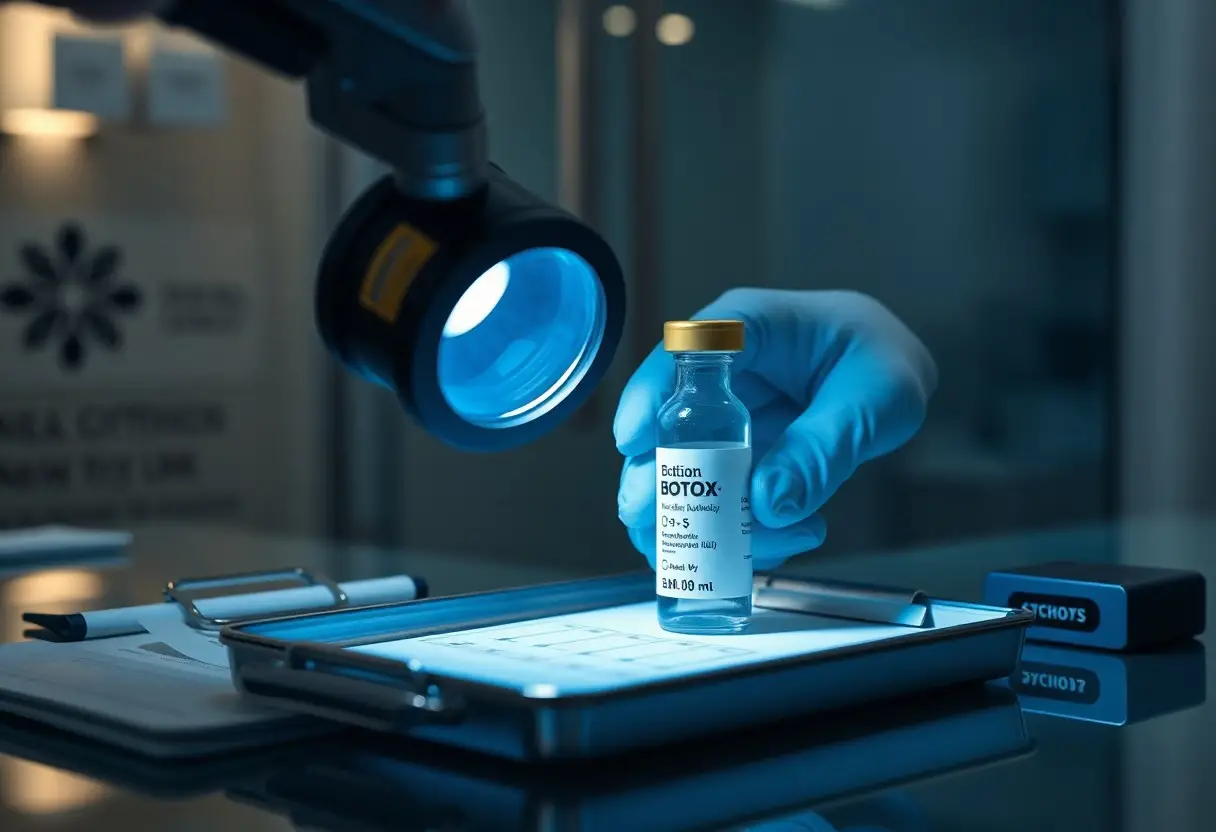
Check that the clinic openly displays licenses, stores vials in proper cold-chain conditions, and lets you verify batch numbers and supplier documentation to confirm product authenticity and safe handling.
Ensuring Use of FDA-Approved Neuromodulators
Verify that the clinic uses FDA-approved neuromodulators; ask to see vial labels and lot numbers, and confirm that you will be treated by a licensed clinician experienced with the specific brand.
Reviewing Clinical Hygiene Standards
Confirm you observe strict hygiene: single-use needles, sealed sterile supplies, visible handwashing stations, and clean treatment areas before you proceed.
Inspect staff routines during your visit: watch clinicians change gloves between patients, see how instruments are sterilized or disposed of, and request to view sterilization logs and infection-control policies. You should ask how often patient areas are cleaned, whether staff receive regular training, and what emergency protocols exist; evasive answers are a red flag to consider another clinic.
Analyzing Patient Results and Local Reputation
You compare patient outcomes, timelines, and neighborhood reviews to judge a clinic’s real-world performance and local reputation.
Examining Authentic Before-and-After Case Studies
Review authentic before-and-after galleries and note consistency, angles, and timing so you can confirm reproducible results rather than one-off successes.
- You review Case 1 – 48F; glabella + crow’s feet; 30 units total; wrinkle-depth reduction 65% at 4 weeks; patient satisfaction 92% at 3 months; downtime 24 hours; photos: baseline, 2 weeks, 1 month.
- You review Case 2 – 35F; forehead only; 18 units; muscle relaxation 80% at 2 weeks; satisfaction 88% at 6 months; retreatment at 4 months noted; photos dated.
- You review Case 3 – 60M; periocular area; 24 units; dynamic-lines improvement 70% at 1 month; no adverse events reported; follow-up documented to 6 months.
- You review Case 4 – clinic series n=50; mean units 22U; average satisfaction 90% at 3 months; complication rate 2%; 46/50 photo-verified positive outcomes.
Vetting New York-Based Patient Testimonials
Check New York-based reviews for mentions of staff professionalism, appointment punctuality, realistic expectations, and sustained results to identify consistent patterns.
Compare reviewer timestamps across platforms, verify photo metadata and location clues, contact named reviewers when possible, ask the clinic for dated consent forms or references, and weigh recurring positives or complaints to decide whether testimonials reflect typical patient experience or isolated cases.
Prioritizing Comprehensive Consultations
Consultations should thoroughly assess your medical history, current medications, and aesthetic goals, ensuring the clinic tailors a safe, realistic plan and answers your questions about risks, downtime, and expected results.
Establishing Personalized Treatment Objectives
You should define which wrinkles or areas concern you, describe your ideal outcome, and share any recovery constraints so the clinician can recommend a tailored dosage, timing, and follow-up plan.
Identifying Red Flags During the Initial Meeting
Watch for vague answers about qualifications, reluctance to review before-and-after photos, lack of informed consent, or pressure to buy multiple sessions-these signal substandard care.
Assess the provider’s certifications, ask for product brands and batch numbers, and verify that staff explain side effects and complication plans; evasive responses, no written consent, or insistence on immediate payment are clear reasons to leave.
Transparency in Pricing and Aftercare Support
Pricing transparency helps you compare clinics quickly; ask for itemized estimates showing per-unit Botox costs, injector fees, facility charges and any additional taxes or supplies so there are no surprises after treatment.
Navigating the NYC Market Rate and Hidden Fees
Compare advertised rates against a full breakdown you get in writing, and watch for consultation fees, touch-up charges, taxes, or supply surcharges that can push NYC prices higher than the quoted rate.
Availability of Post-Procedure Follow-Ups
Confirm whether post-care visits, phone support and emergency access are included or billed separately, and verify how long the clinic commits to monitoring your results and addressing complications.
Ask about the exact follow-up timeline-who conducts the checks at one to two weeks and at six to eight weeks, how bruising or asymmetry are handled, whether virtual visits are offered, if corrective touch-ups are covered within a policy window, and what after-hours emergency contact is available so you know how issues will be managed.
To wrap up
So you can confidently choose a Botox clinic in New York, verify provider credentials, review before-and-after results, check patient reviews, confirm safety and hygiene practices, and compare costs and follow-up care to ensure safe, effective results and a professional experience.