
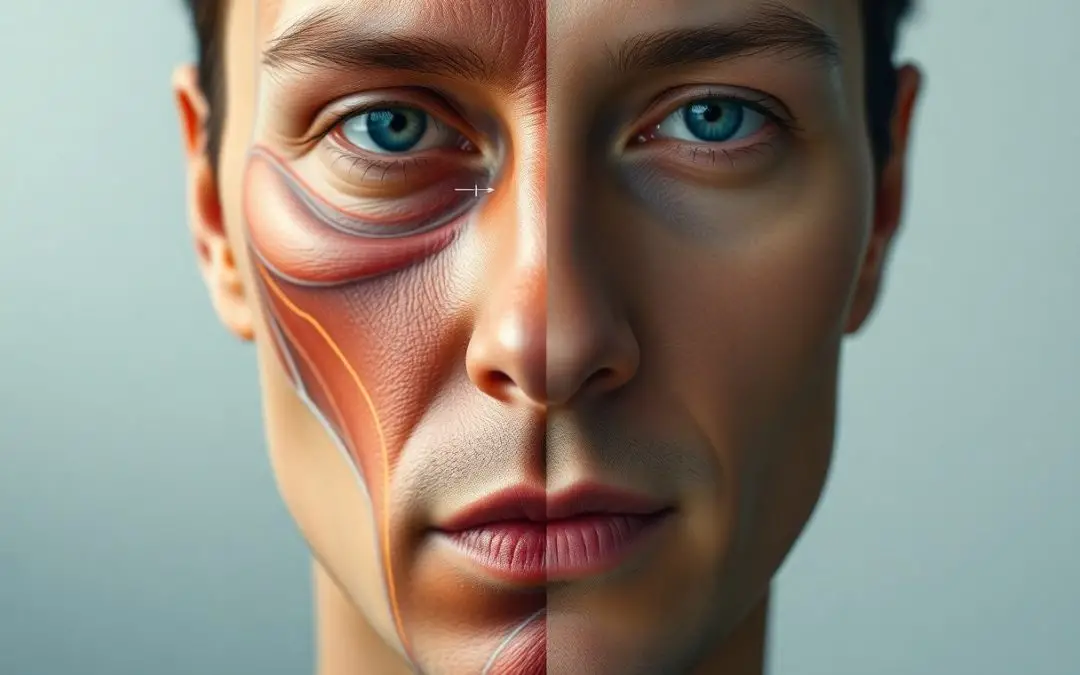
Just as no two faces are identical, your facial anatomy directly shapes how Botox performs for you. The structure of your muscles, skin thickness, and symmetry influence both the outcome and longevity of treatment. Understanding these personal factors helps set realistic expectations and guides precise, effective injections tailored to your unique features.
The Geography of the Visage
Your face is a dynamic map shaped by bone, muscle, and soft tissue. Each region responds uniquely to Botox, influenced by structural landmarks like the brow ridge or jawline. Understanding this topography helps predict how injections will smooth or lift, ensuring results align with your natural contours.
The Weaving of Mimetic Fibers
Mimetic muscles crisscross your face in intricate patterns, each tied to specific expressions. When you frown or smile, these fibers contract with varying intensity. Botox works by quieting overactive ones, but their arrangement means outcomes differ-even slight shifts in placement alter the final effect.
Variations in Cutaneous Depth
Skin thickness varies across your face, affecting how Botox disperses beneath the surface. Thinner areas like the forehead allow quicker diffusion, while denser zones around the cheeks resist spread. This influences dosage and precision, shaping both efficacy and naturalness of movement post-injection.
Dermal depth isn’t uniform-it ranges from paper-thin above the eyes to markedly thicker near the chin. In regions with shallow tissue, Botox can reach unintended muscles if not administered carefully, risking stiffness or asymmetry. You benefit most when your provider accounts for these subtle differences, tailoring depth and volume to each zone for balanced, undetectable results.
The Skeletal Scaffolding
Your facial bones shape how Botox spreads and performs. The underlying structure determines muscle attachment points and skin tension, directly influencing where and how much product you’ll need for balanced results.
Orbital Ridges and Toxin Flow
Orbital ridges act as natural barriers that guide Botox diffusion. If your brow bone protrudes, the toxin may stay more contained, limiting spread into adjacent muscles and reducing the risk of unintended weakening.
Structural Recessions of the Cranium
Areas where the skull dips inward can alter muscle pull and skin drape. These recessions affect how treated muscles relax, sometimes creating uneven outcomes if injection depth or placement isn’t adjusted accordingly.
When your cranium has subtle indentations-particularly along the temples or above the brows-muscle vectors shift in response to the lack of bony support. This changes how contraction forces are distributed, meaning Botox may need to be placed more precisely to prevent asymmetry or compensatory movements in untreated zones. Your unique bone contours demand a tailored approach, not a one-size-fits-all technique.
Neurological Cartography
Mapping facial nerves shapes how Botox behaves in your muscles. Your unique nerve pathways determine where motor signals travel, influencing injection precision. Understanding this layout helps avoid unintended effects and enhances outcome accuracy, ensuring results align with your anatomical blueprint.
Deviant Motor Point Locations
You may have motor points that don’t follow standard anatomical patterns. These variations mean Botox spreads differently across individuals. Targeting the right zone requires recognizing these personal deviations to prevent asymmetry or weakened efficacy in treated areas.
Innervation Density and Precision
Denser nerve networks demand finer control during injection. Your facial regions with tighter innervation respond better to precise dosing. Too much product in a highly innervated zone can lead to overcorrection, so accuracy directly shapes your final expression.
Areas like the glabellar complex or crow’s feet contain tightly packed motor endplates, making them sensitive to small volume changes. When you receive treatment in these zones, even a 0.5-unit difference can alter muscle function. Mastery lies in adjusting technique to match your personal nerve distribution, preserving natural movement while achieving desired smoothing.
The Tug-of-War in Facial Mechanics
Your face operates like a dynamic system of opposing forces, where every muscle contraction triggers a counter-response. This constant interplay shapes your expressions and influences how Botox spreads and performs. When one group weakens, others adjust-sometimes in ways you don’t expect.
Agonist and Antagonist Dynamics
You rely on paired muscle actions every time you frown or raise your brows. When Botox relaxes the agonist-say, the corrugator-its antagonist, like the frontalis, may pull with less resistance. This shift alters your expression balance and can redefine treatment outcomes over time.
Compensation in Secondary Muscle Groups
You might not notice when smaller muscles take over after Botox dampens primary movers. These secondary groups quietly adapt, maintaining familiar expressions despite reduced activity in targeted areas. This hidden effort can shorten your results’ longevity or create subtle asymmetries.
When Botox silences dominant muscles like the procerus, nearby muscles such as the orbital portion of the orbicularis oculi may increase activity to achieve similar expressions. You experience this as slight eye squinting or crow’s feet deepening, even if those areas weren’t treated. Recognizing this shift helps refine future injections and manage expectations.
The Metamorphosis of Aging Tissue
Your face transforms over time in ways that go beyond simple wrinkles. As collagen diminishes and structural fat shifts, the foundation Botox acts upon changes significantly. These deep tissue alterations influence how smooth or pronounced your results appear, making anatomy a silent director in treatment outcomes.
Migration of the Malar Fat Pads
Volume in your cheeks begins to descend with age as malar fat pads shift downward. This movement creates hollows under the eyes and contributes to nasolabial folds. When this occurs, Botox alone can’t address the shadowing and sagging, requiring a more comprehensive approach for balanced correction.
Loss of Elasticity and Surface Response
Skin loses its snap as elastin fibers break down over time. Your complexion may not respond as crisply to Botox because the surface can’t rebound like it once did. This diminished resilience affects how smoothly dynamic lines are minimized, even with precise injections.
Elasticity decline isn’t just about surface texture-it alters how your skin integrates neuromodulator effects. When the dermis lacks flexibility, treated muscles may relax, but the overlying tissue doesn’t conform as seamlessly. You might notice lingering creases despite effective muscle inhibition, highlighting the need to combine treatments for optimal refinement.
Conclusion
Hence, your facial anatomy directly shapes how Botox performs. Muscle thickness, symmetry, and injection depth all influence outcomes. Understanding your unique structure helps achieve natural, balanced results tailored to your features.