
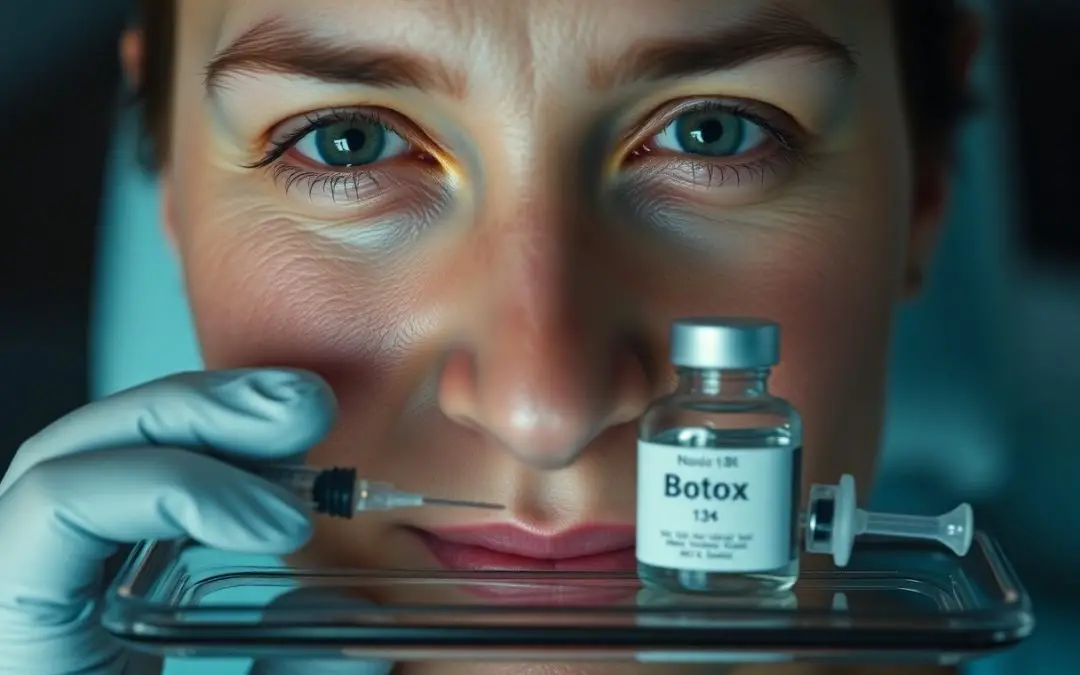
There’s a risk of complications if Botox is injected improperly. You may experience asymmetry, drooping eyelids, or unintended muscle weakness. Incorrect placement can also lead to bruising, headaches, or an unnatural appearance. Your results depend heavily on the injector’s skill and anatomical knowledge, so choosing a qualified professional matters.
The Anatomy of a Misplaced Needle
Every injection relies on precision, and even a millimeter’s deviation can alter results. You’re trusting your injector to map facial muscles with care, but errors happen when anatomy is misjudged. A needle placed too deep or too wide can send Botox into unintended zones, triggering unexpected side effects you didn’t anticipate.
The Paralysis of the Brow
Overinjection in the forehead can weaken muscles that lift your brow. You may notice a sudden heaviness, as if your eyebrows are stuck or sinking. This droop isn’t just cosmetic-it can affect your expression and make you appear tired or uninterested.
The Descent of the Eyelid
When Botox migrates into the eyelid-lifting muscle, you might develop a droopy eyelid. This occurs because the drug disrupts the normal nerve signals that keep your lid elevated. The effect is temporary but can last weeks, altering your vision and appearance.
Drooping of the eyelid, or ptosis, typically arises when Botox diffuses into the levator palpebrae superioris, a muscle responsible for raising your upper lid. This often happens with improper placement near the orbital rim or excessive dosage. While it resolves as the neurotoxin wears off, it can impair peripheral vision and cause asymmetry during healing. Your best protection is choosing a provider with detailed anatomical knowledge and a conservative technique.
The Mask of the Frozen Visage
You’ve seen it-the face that doesn’t move when laughter fills the room. When Botox is placed too broadly or in excessive doses, natural animation vanishes, leaving skin smooth but expressionless. This overdone result doesn’t enhance youth-it erases personality, turning subtle wrinkles into a rigid, mask-like finish that draws more attention than it deflects.
Expressions Lost in the Void
Your forehead stays blank, even when surprise or concern crosses your mind. Without the ability to lift your brows or wrinkle your forehead, emotional cues disappear. Others may misread your mood, thinking you’re disinterested or aloof. These lost micro-expressions chip away at connection, turning everyday interactions into moments of misunderstanding.
The Asymmetry of the Smile
One side of your smile lifts higher than the other, creating an uneven appearance that feels impossible to ignore. This imbalance often stems from imprecise targeting of facial muscles, especially around the mouth and lower face. The result isn’t subtle-it’s a telltale sign of misaligned injections.
When Botox migrates or is injected unevenly into the muscles controlling your smile, such as the zygomaticus or depressor anguli oris, one side of your mouth may droop or fail to lift. You might notice difficulty showing genuine emotion or feel self-conscious when speaking or laughing. Correcting this requires time, patience, and often follow-up treatment to rebalance muscle activity as the product wears off.
Physical Maladies and Ocular Woes
You may experience unexpected physical reactions when Botox is misplaced, especially around the delicate eye area. Incorrect placement can lead to drooping eyelids, uneven brows, or muscle weakness that alters your natural expression. These effects, while often temporary, disrupt both comfort and confidence.
The Weeping Eye
Your tear ducts can lose regulation if Botox migrates into the wrong facial zone. This may cause excessive tearing or a constant feeling of wetness without emotional trigger. The imbalance stems from disrupted signals in the muscles controlling tear drainage, leaving you with an unrelenting watery gaze.
Blurred Visions of the Soul
Your sight may not be clinically impaired, yet the world feels hazy when facial paralysis distorts your natural expressions. Others struggle to read your emotions, creating distance in conversations. This subtle disconnect can make you feel unseen, even when fully present.
Emotional expression relies heavily on micro-movements in the forehead and around the eyes-areas commonly treated with Botox. When these muscles are over-relaxed or improperly targeted, your face may not reflect your inner state. People might perceive you as disinterested or cold, not realizing the neuromuscular blockades behind your stillness. This mismatch between feeling and appearance can erode connection, making social interactions feel strained or misaligned. You remain aware, expressive inside-but the mirror, and others, don’t quite see it.
Systemic Terrors of the Toxin
Incorrect Botox placement can send the toxin beyond targeted muscles, triggering widespread effects. You may experience flu-like symptoms, fatigue, or muscle weakness far from the injection site. In rare cases, the toxin migrates to critical areas, disrupting normal body functions and demanding immediate medical attention.
The Breathless Gasp
Unintended diffusion into neck or chest muscles can impair your ability to breathe. You might feel sudden tightness or struggle to inhale fully. This reaction, though rare, signals a dangerous spread and requires emergency care without delay.
Migraines of the Mind
Unexpected headaches can strike when Botox affects nerves in the forehead or scalp. You may feel pressure, throbbing, or sharp pain behind the eyes. These migraines often emerge within days of treatment and can persist if the dosage was excessive or misplaced.
When Botox spreads into sensitive nerve clusters around the temples or brow, it can over-relax muscles that support blood flow and neural signaling. You might not realize the connection at first, mistaking the pain for stress or dehydration. Yet, the origin lies in disrupted neuromuscular activity, where even slight miscalculations during injection lead to prolonged head discomfort. Adjusting future treatments with precise mapping reduces this risk significantly.
The Path to Restoration
Recovery from improper Botox begins with patience and informed choices. Your body will metabolize the toxin over time, but how you respond now shapes your healing. Recognizing the issue is only the first step-what follows determines your outcome.
Waiting for the Toxin to Fade
Time is your ally when Botox is misplaced. The effects typically diminish over three to six months as the neuromodulator naturally breaks down. You can’t rush this process, but understanding its timeline helps manage expectations and reduce anxiety during recovery.
Seeking the Master Physician
A skilled injector can correct asymmetries or complications with precision. You need someone with deep anatomical knowledge and experience in reversal strategies. Their expertise may include strategic touch-ups or complementary treatments to restore balance and function.
Choosing the right physician means looking beyond credentials to actual outcomes. Review their before-and-after cases, especially those involving corrections. A master understands facial dynamics, not just injection points, and will tailor a plan specific to your anatomy and concerns. Trust is earned through consistency, not marketing.
Conclusion
Upon reflecting on incorrect Botox injections, you understand that improper placement can lead to asymmetry, drooping eyelids, or unintended muscle weakness. Your results depend heavily on injector skill and anatomical knowledge. Choosing a qualified professional minimizes risks and ensures safer, more effective outcomes tailored to your facial structure.