
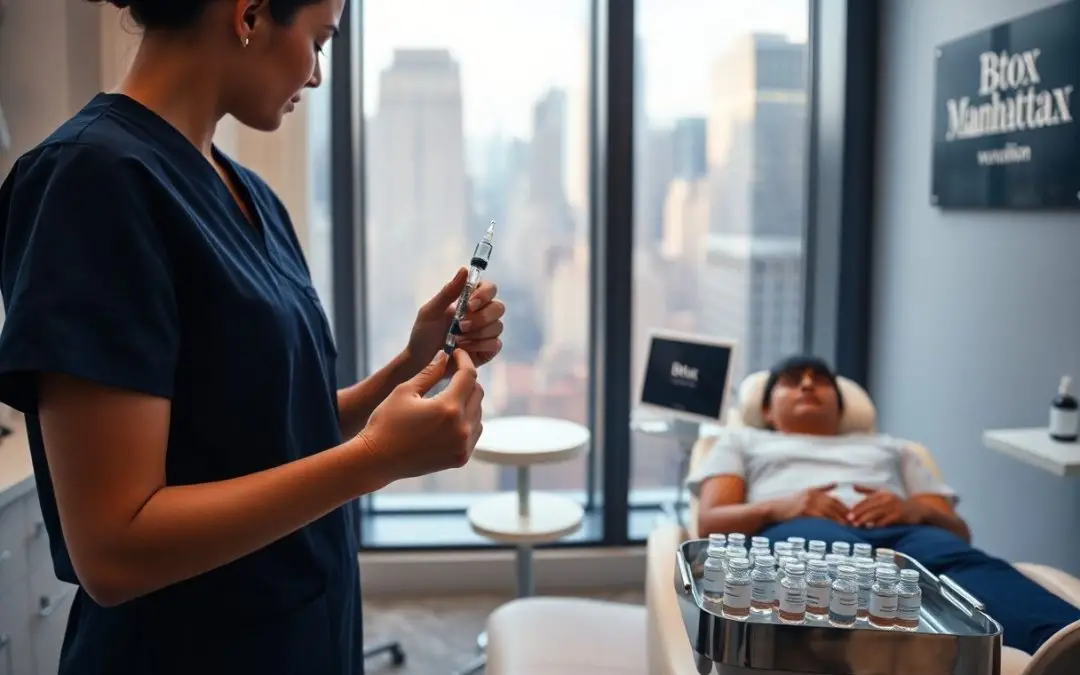
There’s a well-established network of experienced clinicians in Manhattan offering Botox treatments that help you reduce dynamic wrinkles with minimal downtime; your provider assesses facial anatomy, tailors dosing for natural-looking results, and follows safety protocols so you can make informed decisions about maintenance, expected outcomes, and a refreshed appearance.
Understanding Botox
You should focus on specific indications, expected timelines, and measurable outcomes: Botox (onabotulinumtoxinA) was FDA-approved for glabellar lines in 2002, typically begins to soften movement within 3-7 days, peaks around 2 weeks, and lasts about 3-4 months per treatment. Side effects you may encounter are usually mild-bruising, transient headache, or localized weakness-and injector technique and dosing determine natural-looking results versus frozen appearance.
What is Botox?
Botox is a purified neurotoxin derived from Clostridium botulinum formulated as onabotulinumtoxinA and dosed in units for precision. You’ll see it used cosmetically for dynamic wrinkles and medically for conditions like chronic migraine and hyperhidrosis; approved indications expanded over the last two decades. Typical cosmetic dosing varies by area-glabellar often ~20 units total, forehead 8-20 units, and crow’s feet 6-15 units per side-so your treatment is individualized.
How Botox Works
Botox acts at the neuromuscular junction by blocking acetylcholine release, temporarily reducing muscle contraction that causes dynamic lines; the biochemical effect involves cleavage of SNARE proteins, preventing vesicle fusion. You can expect onset in days, peak smoothing at two weeks, and gradual return of motion over roughly 3-4 months, which is why most patients schedule repeat sessions two to four times a year to maintain results.
Digging deeper, onabotulinumtoxinA specifically cleaves SNAP-25, interrupting synaptic vesicle docking; alternative type-A formulations like abobotulinumtoxinA (Dysport) or incobotulinumtoxinA (Xeomin) have different diffusion and unit equivalencies, so your injector calibrates dose and injection points accordingly. Injection depth, dilution, and precise placement determine spread and functional effect, which is why experienced practitioners tailor protocols to your facial anatomy and treatment goals.
Benefits of Botox for Anti-Aging
You’ll often notice softening of dynamic wrinkles within 3-7 days, with peak effect around two weeks and typical duration of 3-4 months. By selectively relaxing muscles that cause frown lines, crow’s feet and forehead creases, Botox delivers predictable smoothing with minimal downtime. Typical dosing ranges-glabellar about 20 units, crow’s feet 6-12 units per side, forehead 10-20 units-help clinicians tailor results, and patient-reported satisfaction in aesthetic practices commonly exceeds 80%.
Reducing Fine Lines and Wrinkles
You see fine lines fade as targeted injections reduce repetitive muscle contractions; dynamic wrinkles respond fastest, often within a week. Practitioners use small, precise injections-4-6 sites across the forehead or 3-4 per lateral eye-to distribute 10-20 units for forehead lines and 6-12 units per side for crow’s feet. Combining Botox with hyaluronic acid fillers addresses deeper static creases, giving you smoother skin both at rest and in motion.
Enhancing Facial Contours
You can refine jawline, chin, and brow shape non-surgically by rebalancing facial muscles with Botox. Treating the masseter with 20-40 units per side commonly reduces muscle bulk over 6-12 weeks for a slimmer lower face, while targeted injections to peri-orbital depressors can produce a 1-3 mm lateral brow lift. Results are gradual and reversible, allowing you to adjust contours across follow-up sessions.
Expect visible slimming after 6-12 weeks as the masseter atrophies from reduced activity; many patients move to 1-2 maintenance treatments per year once their desired shape is reached. For chin dimpling or downturned mouth corners, small doses (2-6 units) to depressor muscles create subtle elevation without impairing function. Combining Botox with midface fillers restores cheek support, enhancing jawline definition and achieving balanced, youthful proportions you can fine-tune over successive treatments.
Choosing a Provider in Manhattan
You should prioritize board-certified dermatologists or plastic surgeons with dedicated cosmetic practices in Manhattan; ideally those with 3+ years injecting experience and 500+ Botox treatments logged. Verify New York state licensure and clinic accreditation, check before-and-after galleries for cases similar to yours, and confirm clear emergency protocols. Ask about typical unit use-glabellar often averages ~20 units-and average patient follow-up schedules so you know the provider’s clinical patterns and outcomes.
Factors to Consider
Focus on measurable credentials and clinic workflow: board certification, a visible injection log, and a sterile, well-equipped office within Manhattan are primary markers. Seek providers who offer documented outcomes-before/after photos and patient satisfaction metrics-and who discuss realistic results, risks, and touch-up policies. Perceiving how they explain potential side effects and recovery time often tells you whether they prioritize safety and informed consent.
- Board certification (dermatology or plastic surgery) and New York state license
- Years of injector experience and total Botox procedures (aim for 500+ as a benchmark)
- Before-and-after photos for patients with similar facial anatomy
- Clinic safety measures, emergency protocols, and on-site trained staff
- Clear written consent, pricing transparency, and follow-up policy
Questions to Ask
Ask how many Botox injections they perform monthly and the typical units used for common areas-glabellar lines average ~20 units, crow’s feet ~6-12 units per side-and request complication rates (ptosis risk often cited around 1-5% depending on technique). Inquire about cost per unit (Manhattan commonly ranges $12-$20), expected duration of results, and scheduling for a 1-2 week follow-up to assess fine-tuning.
Be specific: ask “How many of these exact procedures have you done?” and “Can I see before/after photos of patients with my concerns?” Expect answers that include concrete numbers (years practicing, treatments performed annually, complication percentages) and a clear plan for managing side effects. If the injector suggests follow-up touch-ups at 2 weeks or documents a standard 4-12 week efficacy window, that indicates organized aftercare; avoid providers who can’t produce data or who dismiss your questions about safety and outcomes.
The Botox Procedure
You’ll begin with a focused consultation to map target muscles and discuss goals; common dosing ranges are 15-25 units for the glabella, 10-30 units for the forehead, and 6-15 units per side for crow’s feet. After brief cleansing and optional topical anesthetic, microinjections take 5-15 minutes using a fine needle. Effects typically start within 2-4 days, peak at about two weeks, and generally last 3-4 months before retreatment is considered.
What to Expect Before, During, and After
Before your appointment you may be advised to avoid NSAIDs, aspirin, and alcohol for 48-72 hours to lower bruising risk. During the session expect brief pinch sensations and treatment time of 10-30 minutes. Afterward you should stay upright for four hours, avoid massaging injection sites and strenuous exercise for 24 hours, and watch for initial smoothing within 2-7 days with full results by two weeks.
Recovery and Aftercare
Mild swelling, pinpoint bleeding, or bruising occurs in roughly 10-20% of patients and resolves within 3-7 days; apply a cold compress immediately for 10-15 minutes to reduce swelling. You can use acetaminophen for discomfort, avoid saunas and heavy exertion for 24-48 hours, and expect normal activities the same day barring vigorous exercise. Schedule a two-week follow-up for touch-ups and assessment of symmetry.
For bruising consider topical arnica or oral arnica 24 hours before and after-many clinics recommend stopping fish oil and vitamin E one week prior to reduce bleeding risk. Seek clinic contact if you develop progressive weakness, drooping eyelid, severe pain, or asymmetry that doesn’t improve by two weeks; ptosis is uncommon (<2%), but prompt evaluation lets your provider manage complications and plan any necessary adjustments or retreatment every 3-4 months.
Risks and Considerations
The main risks center on localized effects and rare systemic reactions; bruising and swelling occur in roughly 10-20% of patients, transient headaches in about 1-10%, and eyelid ptosis ranges from 1-3% depending on injector technique. You lower risk by choosing a board-certified injector, discussing prior surgeries, and following pre/post-care (avoid NSAIDs, alcohol). Adverse systemic spread is uncommon at cosmetic doses but merits immediate evaluation if you develop difficulty breathing or swallowing.
Possible Side Effects
Bruising and swelling at the injection site are the most common reactions, seen in about 10-20% of cases; you may notice redness, tenderness, or small hematomas that resolve in 5-14 days. Asymmetry or eyelid droop can occur in 1-3% of treatments, often improving over weeks. Headache and flu-like symptoms affect up to 10% of patients. Apply ice, avoid blood thinners when advised, and contact your provider for persistent or worsening symptoms.
Understanding Contraindications
Pregnancy and breastfeeding are contraindications due to lack of safety data, so you should defer treatment. Active infection at the injection site, known hypersensitivity to botulinum toxin or formulation components, and neuromuscular disorders such as myasthenia gravis or Lambert-Eaton syndrome also preclude treatment because of increased risk of systemic weakness. Discuss current antibiotics (aminoglycosides) and anticoagulants with your clinician before proceeding.
During screening you must provide a detailed medical history, listing prior facial surgery, neurologic diagnoses, and all medications including over-the-counter supplements; botulinum toxin interactions with aminoglycosides and muscle relaxants can potentiate paralysis. If you take warfarin or direct oral anticoagulants your bleeding risk rises and your provider may request INR checks or coordinate temporary adjustments. When in doubt, request a specialty consult-neurology input is often advised for complex neuromuscular cases.
Costs and Financing Options
Average Pricing in Manhattan
In Manhattan you’ll find Botox is typically priced per unit, often between $15 and $20 per unit; average treatments use 20-40 units, so expect roughly $300-$800 for common cosmetic areas. For example, glabellar lines often require 20-30 units ($300-$600), while crow’s feet may be 12-24 units ($180-$480). High-end practices may charge flat fees of $400-$1,200 for combined areas, and package deals (three sessions) frequently reduce per-treatment cost by 10-20%.
Financing Choices Available
You can use medical credit cards and third-party pay options: CareCredit, Alphaeon, Klarna and Afterpay are commonly accepted at Manhattan clinics, and many offer in-house payment plans or package prepayments. If Botox is prescribed for migraines or hyperhidrosis, HSA/FSA may cover it; otherwise cosmetic Botox usually isn’t eligible. Promotional offers often include 0% interest for 6-24 months or low fixed monthly payments.
When choosing financing, compare APR, deferred-interest terms, minimum purchase requirements and how applications affect your credit. CareCredit frequently provides 6-24 month no-interest plans after approval; Klarna and Afterpay split payments into four interest-free installments if paid on time. For example, 40 units at $18/unit equals $720; a 12‑month 0% CareCredit plan would be $60/month. Ask clinics about deposits, cancellation fees and package discounts before committing.
Final Words
Considering all points, Botox Manhattan offers you trusted anti-aging care through experienced providers, individualized treatment plans, and strict safety standards; you can expect natural-looking results, clear communication during consultations, and appropriate follow-up to maintain outcomes-choose a board-certified clinician, discuss goals and risks openly, and prioritize realistic expectations to make the most of your treatment.