
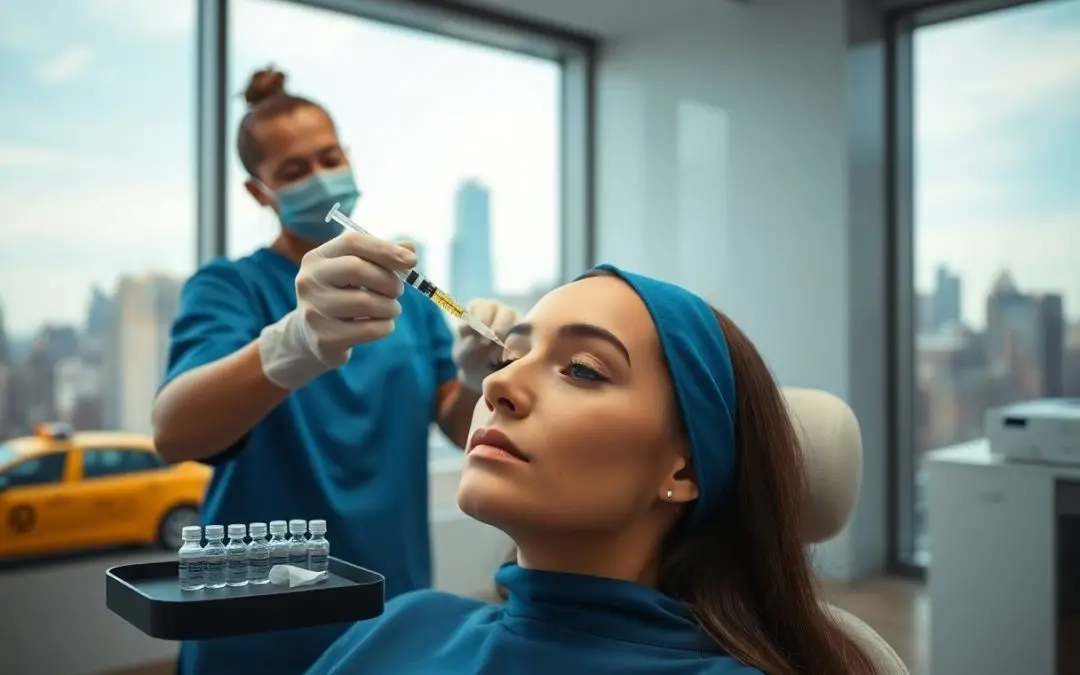
With expert injectors and precise techniques available in NYC, you can achieve subtle, beautiful Botox results that enhance your features while preserving natural expression. During a personalized consultation your provider will assess movement patterns and tailor dosing to your anatomy, minimize downtime, and set realistic expectations so you leave looking refreshed-not frozen-confident in a natural outcome.
Understanding Botox
What is Botox?
Botox (onabotulinumtoxinA) is a purified neurotoxin from Clostridium botulinum, FDA‑approved in 2002 for glabellar lines and widely used off‑label for forehead lines, crow’s feet, hyperhidrosis, and migraine prevention. You’ll receive minute doses measured in units-typical cosmetic sessions involve single‑digit to low‑double‑digit units per area-and its long track record and millions of annual treatments reflect predictable outcomes when administered by trained injectors.
How Botox Works
Botox inhibits acetylcholine release at the neuromuscular junction, producing targeted muscle relaxation that softens dynamic wrinkles; you’ll often see effects within 3-7 days, peak around two weeks, and expect duration of roughly 3-4 months. Dosing is area‑specific-for instance, glabellar injections commonly total about 20 units across five sites, while crow’s feet typically use 6-12 units per side.
Diffusion, dilution, and injection depth shape results, so you’ll achieve subtler outcomes with conservative unit counts, precise placement, and tailored dilution. Techniques like “baby Botox” or micro‑Botox use smaller, dispersed doses to smooth movement without a frozen look, and experienced NYC injectors commonly reassess at 2 weeks to adjust by 2-4 units for optimal natural appearance.
Benefits of Botox Treatments
You’ll notice targeted smoothing of dynamic lines with minimal downtime: effects typically begin within 2-7 days, peak around two weeks, and last about 3-4 months. Treatments approved by the FDA for glabellar lines since 2002 can address forehead lines and crow’s feet, reduce hyperactivity in overactive muscles, and often require only 10-30 minutes per session. When performed by a board-certified injector, risks are low and recovery usually allows you to return to normal activities immediately.
Subtle Enhancements
You can achieve a natural look through micro-dosing techniques-often 2-5 units per injection site-so movement is preserved while fine lines soften. Many NYC practitioners use “baby Botox” for clients seeking refinement rather than a frozen appearance, spacing injections across the forehead and glabella to balance symmetry. Small, strategic doses let you maintain expressiveness and fine-tune results at follow-ups every 3-4 months.
Boosting Confidence
After seeing reduced frown lines and smoother skin, you may feel more confident in social and professional settings; one common protocol is a 20-unit glabellar treatment that restores a more rested appearance within two weeks. Patients often report improved self-image and comfort on camera or during meetings, because subtle softening of lines shifts attention from age signs to your natural expressions.
To build lasting confidence, plan treatments as part of a maintenance schedule: reassess at two weeks for adjustments and return every 3-4 months to sustain results. Combining conservative Botox with targeted skincare, SPF, and occasional neuromodulator-to-filler strategies for volume loss can produce complementary improvements; discuss measurable goals (e.g., soften a 3-4 mm glabellar crease) with your provider so you get predictable, repeatable outcomes.
Choosing the Right Provider in NYC
Verify board certification in dermatology or plastic surgery, ask if they perform 500+ Botox treatments per year, and review before-and-after photos of patients in your age group. Check that consultations include dynamic facial analysis, documentation of baseline movement, and a written plan with expected units and follow-up at two weeks. Prioritize clinics with clear pricing, medical emergency protocols, and a state-licensed setting to protect your safety and results.
Credentials and Experience
Prefer board-certified physicians or physician-supervised injectors and ask how many years they’ve injected-5+ years indicates sustained practice. Request case logs or 50+ before/after examples showing subtle outcomes, and confirm ongoing education such as ASDS/ASPS membership or advanced injection courses. Also ask for complication statistics and protocols so you know how your provider handles bruising, asymmetry, or other adverse events.
Client Reviews and Testimonials
Scan RealSelf, Google and Yelp for practices with 4.5+ average ratings and recent reviews that cite specific results like “softened frown without frozen forehead.” Prioritize testimonials with unedited before/after photos and note whether reviewers highlight good follow-up care or quick management of issues. Pay attention to how the clinic replies to criticism-prompt, professional responses indicate better patient care.
Cross-check ratings across platforms and note review dates-consistent praise over 12-24 months suggests reliable outcomes. Inspect photo timestamps and request unedited, standardized-lighting before/afters; ask to see at least five cases matching your age or facial anatomy. If negative reviews mention complications, evaluate how quickly the clinic followed up and whether corrective care or refunds were offered to gauge how your concerns would be handled.
Preparing for Your Botox Treatment
Before your appointment, stop aspirin, NSAIDs, and fish-oil supplements 7-10 days if safe, and avoid alcohol for 24-48 hours to lower bruising risk. Bring a full medication list and photos of previous treatments, arrive 10-15 minutes early, and wear minimal makeup. You should plan light activity for 24 hours post-treatment; most people see initial improvement in 3-5 days with full effect by 10-14 days, and typical results last about 3-4 months.
Consultation Process
Your consultation will map dynamic muscle movement and review medical history, including pregnancy, neuromuscular conditions, and blood thinners. Expect facial photos, directed expressions (frown, raise brows) to pinpoint injection sites, and a dosing plan-glabella often 15-30 units, forehead 10-30, crow’s feet 5-15 per side. You’ll sign consent, discuss realistic goals and risk mitigation, and schedule a two-week follow-up for potential touch-ups.
What to Expect
Treatment sessions typically take 10-30 minutes with brief pinches and minimal downtime; mild swelling or bruising can appear for 24-48 hours. You should avoid rubbing the area and lying face-down for about four hours, and skip strenuous exercise for 24 hours. Noticeable softening begins in 3-5 days, with peak results at 10-14 days and maintenance every 3-4 months as desired.
Aftercare details matter: apply ice intermittently for the first few hours to reduce edema and consider topical arnica or bromelain to help bruising. If a bruise develops, it usually fades within 7-10 days; a tiny percentage of patients may experience ptosis or asymmetry, often resolving within weeks or addressable at the two-week follow-up. Track units and injection sites in your chart so future treatments can be adjusted-many patients start conservatively and add 10-20% more units at the next visit if needed for symmetry and longevity.
Aftercare and Maintenance
Post-Treatment Guidelines
Within the first 4 hours you should avoid lying flat and refrain from rubbing or massaging the treated zones to prevent product migration. Skip heavy exercise, saunas, and alcohol for 24-48 hours to limit bruising and swelling. If you develop a bruise, apply cold packs for 10-15 minutes every hour during day one and consider topical arnica; contact your injector for persistent redness, asymmetry, or intense pain.
Maintaining Results
Most patients notice onset in 3-7 days and full effect by 14 days; typical duration ranges 3-4 months, with some lasting 4-6 months. You’ll get the best continuity by scheduling maintenance every 3-4 months and returning at two weeks for a touch-up if needed. Consistent timing helps prevent muscle rebound and allows your injector to fine-tune dosing based on your response.
Track your progress with photos at baseline and two-week intervals so you and your injector can adjust units precisely; many providers report being able to reduce total units over time with micro-dosing or “baby Botox.” Pairing treatments with diligent SPF use, topical retinoids, and smoking avoidance preserves collagen, and combining occasional fillers or laser resurfacing can extend visible improvement and maintain a natural, balanced appearance.
Common Myths and Misconceptions
You’ve likely heard Botox will leave you frozen or that it’s only for older faces, but experienced injectors use conservative, targeted dosing-often 10-30 units for the forehead and 15-20 units for the glabellar area-to soften lines while preserving expression. Many NYC patients choose staged treatments and report natural outcomes; side effects are usually limited to brief bruising or soreness. What matters most is injector technique and individualized planning, not blanket fears about the product itself.
Addressing Fear of Overdoing It
Start small: clinics commonly use microdosing (2-4 units per injection point) and schedule a 2-week follow-up for touch-ups, so you can increase effects gradually if needed. Injection maps and dynamic assessments ensure balance across brow, forehead, and lateral lines; that means you get subtle improvement rather than a frozen appearance. If you’re hesitant, ask for a conservative plan with documented before/after photos to track natural movement over time.
Longevity of Results
Expect effects to appear within 3-7 days and peak around two weeks, with typical durability of 3-4 months and a common range of 2-6 months depending on dose and area. For example, a 20‑unit glabellar treatment often lasts about 3-4 months, while higher doses or larger muscles can push that toward 4-5 months. Plan maintenance treatments accordingly to sustain subtle results without overtreating.
Several factors influence how long your results last: metabolic rate, muscle strength, injection technique, and product choice (onabotulinumtoxinA versus incobotulinumtoxinA can behave slightly differently). Repeated, appropriately spaced treatments-often 2-3 in succession-can sometimes allow you to extend intervals from three months to four or more, and adjusting dose by 10-20% based on response helps optimize longevity while minimizing risks.
To wrap up
Following this you can confidently choose NYC Botox treatments to achieve subtle, beautiful results that enhance your features while maintaining natural expression. Your provider will tailor doses and placement to your anatomy and aesthetic goals, minimizing downtime and risk. With informed consultations and experienced injectors, you get predictable, refined outcomes that support your desired look and long-term skin goals.