
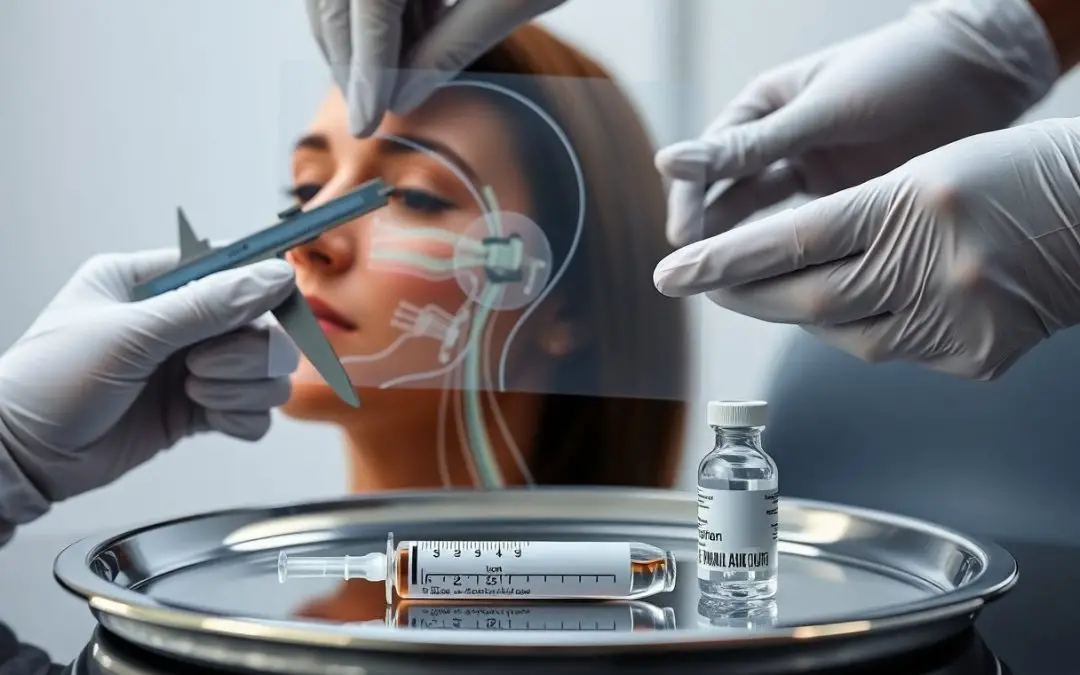
It’s your facial muscle strength that determines how Botox spreads and how long results last. Stronger muscles may require higher doses or more precise targeting to achieve balanced, natural-looking outcomes. Your provider uses muscle activity to customize treatment, ensuring symmetry and effectiveness while preserving your unique expressions.
The Mechanics of the Expressive Engine
Your face moves because muscles contract beneath the skin, creating the expressions you use every day. These muscles vary in size and strength from person to person, affecting how deeply lines form over time. Stronger facial muscles generate more force, leading to deeper dynamic wrinkles when you smile, frown, or squint. This natural variation shapes how Botox spreads and how long it lasts in your tissue. Treatment must account for your unique muscle activity to achieve balanced, natural-looking results. A tailored approach ensures precision in dosage and placement, aligning with your anatomy and aesthetic goals.
Each unit of Botox carries measurable impact on facial dynamics. Your provider calculates dosage not by guesswork, but by mapping muscle strength and surface area. Stronger muscles demand slightly higher units to achieve balanced relaxation. Underdosing may leave lines unchanged; overdoing risks stiffness. Precision ensures natural movement while softening expression lines.
Biological Variables in Density
Your facial muscle density varies due to biological factors like age, genetics, and hormonal activity. These elements influence how tightly packed your muscle fibers are, which directly affects Botox diffusion. Thicker muscles may require higher dosages or more precise injection techniques to achieve balanced results. Your provider must account for these individual differences to ensure natural-looking outcomes.
The Architecture of Furrows
Your facial expressions shape the patterns of lines that form over time. Repeated muscle contractions in specific areas create furrows, especially between the brows and around the eyes. These grooves aren’t just surface wrinkles-they reflect underlying muscle strength and movement frequency. Stronger muscles produce deeper, more persistent folds. Understanding this structure helps tailor Botox dosing and placement precisely to your anatomy.
The Metabolism of Stillness
Your facial muscles don’t just move-they consume energy, respond to tension, and adapt over time. When Botox limits movement, the reduced activity alters how these muscles metabolize nutrients and maintain tone. You may notice subtle changes in muscle density weeks after treatment, not just from paralysis, but from this quiet metabolic shift. This stillness reshapes the tissue environment, influencing how long results last and how future doses should be calibrated.

Balancing the Asymmetric Face
Your face may not be perfectly symmetrical, and that’s normal. Small differences in muscle strength can create uneven expressions, affecting how Botox spreads and settles. We adjust injection depth and dosage to even out movement, softening overactive areas while preserving natural animation. Precision here ensures results look balanced, not frozen.
Conclusion
Your facial muscle strength directly shapes the effectiveness and strategy of Botox treatments. Stronger muscles may require higher doses or more precise targeting to achieve desired smoothing effects, while weaker muscles respond more quickly. Tailoring treatment to individual muscle activity ensures natural-looking results and longer-lasting outcomes, making personalized assessment imperative in your care plan.