
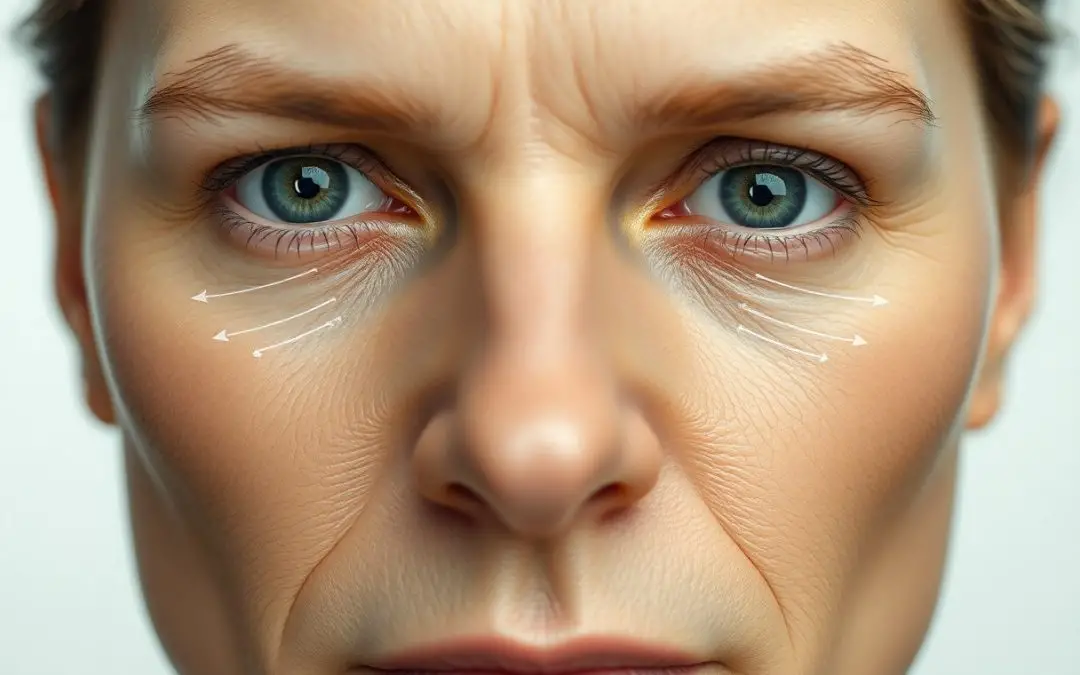
Just beneath your skin, every smile, frown, and squint sets tiny facial muscles in motion. These repeated contractions, over years, create grooves that evolve into visible lines. Your expressions shape your skin’s aging pattern, making movement a key factor in wrinkle development where collagen weakens and elasticity fades.
The Biological Machinery of Expression
Your face moves because muscles beneath the skin contract with every expression. These contractions transmit force directly to the overlying dermis, creating dynamic shifts that define smiles, frowns, and squints. Over time, repeated motion imprints patterns into the skin’s structure, setting the stage for wrinkle development where movement is most frequent.
Muscular Integration with the Dermis
Each time you smile or frown, tiny facial muscles pull on collagen fibers in the dermis. These contractions are tightly linked to the skin’s deeper layers through a network of connective tissue. With repetition, this persistent tugging begins to compromise the skin’s ability to rebound fully, especially in areas like the forehead and around the eyes.
Physical Fatigue of the Dermal Matrix
Years of repeated muscle activity wear down the skin’s supportive framework. The dermal matrix, made of collagen and elastin, loses resilience from constant stretching. Once this structural fatigue sets in, expression lines become etched even when the face is at rest, marking the transition from temporary creases to permanent wrinkles.
Every time you raise your eyebrows or squint, the underlying dermal matrix endures micro-stress. Initially, it recovers well, but over decades, the cumulative strain reduces its elasticity. Enzymes like matrix metalloproteinases accelerate the breakdown of collagen, weakening the scaffold that keeps skin smooth. Without sufficient repair between contractions, the matrix fails to maintain its original form, making wrinkles more pronounced and persistent. This slow degradation reflects the body’s diminishing repair capacity with age, turning expressive vitality into lasting lines.
The Evolution of Dynamic Creases
Every time you smile, frown, or squint, your facial muscles contract and create temporary folds in the skin. These dynamic creases form naturally with expression and are harmless in youth, when skin elasticity keeps them fleeting. Over years, however, repetition etches these lines deeper, setting the stage for lasting changes.
Transient Folds of the Youthful Face
Your skin bounces back easily in early years, erasing expression lines the moment your face relaxes. These transient folds appear with laughter or concentration but vanish quickly, thanks to high collagen and elastin levels. Movement leaves no trace-your face resets like unstretched fabric.
The Gradual Etching of Static Lines
With age, repeated muscle contractions begin to leave behind faint traces even at rest. These once-temporary grooves grow more defined, transitioning into static lines visible without expression. Sun exposure, gravity, and slower cell turnover deepen their presence over time.
Each contraction of your forehead or crow’s feet muscles tugs at collagen fibers that are slowly losing resilience. As skin repair mechanisms weaken, the damage from daily movements accumulates. What started as a fleeting wrinkle after years of smiling now remains etched, a permanent imprint of your most frequent expressions. Prevention through early care and mindful habits can slow this progression.
Cellular Responses to Mechanical Stress
You experience repeated facial movements daily, and each contraction transmits mechanical stress to skin cells. This constant strain triggers fibroblasts to alter their activity, sometimes accelerating breakdown rather than repair. Over time, these micro-responses accumulate, weakening structural integrity and setting the stage for persistent wrinkles.
Impact on Collagen and Elastin Networks
Your expressions place recurring tension on collagen and elastin fibers. With each motion, these supportive proteins endure microscopic strain, leading to fragmentation and reduced resilience. As repair mechanisms slow with age, the damage outpaces renewal, diminishing skin’s ability to rebound and deepening visible creases.
The Thinning of the Dermal Layer
Your dermis naturally loses volume over time, but repeated muscle movement accelerates the process. Each contraction contributes to structural fatigue, reducing the layer’s density. This thinning compromises support for the epidermis, making fine lines more pronounced and harder to reverse.
With every smile or frown, the dermal layer sustains subtle trauma that compounds over years. Decreased fibroblast activity and slower regeneration diminish its thickness, particularly in high-motion zones like the forehead and around the eyes. As this foundational layer weakens, the skin’s surface begins to fold along habitual lines, turning temporary expressions into lasting marks.
Regional Topography of Movement
Your face moves in distinct patterns, each region responding uniquely to repeated muscle contractions. Over time, these dynamic zones develop characteristic lines where motion is most frequent. The way your muscles interact with overlying skin shapes the topography of aging, revealing where expression leaves its mark.
Orbicularis Oculi and Periorbital Furrows
You blink, squint, and smile using the orbicularis oculi, a ring-shaped muscle around the eye. With each contraction, tiny folds form at the outer corners. Over years, these transient creases deepen into periorbital furrows, commonly known as crow’s feet, due to repeated compression of delicate skin.
Corrugator Activity and Glabellar Indentations
You frown without always realizing it, engaging the corrugator muscles between your brows. Their downward pull creates vertical lines that etch into the skin with repetition. These glabellar indentations grow more defined over time, especially with frequent furrowing.
Each time you narrow your eyes or express concern, the corrugator supercilii contracts diagonally, drawing the eyebrows together and downward. This persistent motion compresses the skin in the glabella, a small but expressive zone. Without sufficient collagen resilience, these transient lines become fixed, forming the familiar “11” lines that mark habitual expression.
Neurological Habits and Facial Posture
Your face reflects more than emotion-it records years of unconscious movement patterns. The way you habitually hold your brows, part your lips, or clench your jaw shapes the lines that form over time. These neurological imprints become structural, turning fleeting expressions into lasting creases.
Subconscious Tonicity and Resting Tension
Tension often lingers in your forehead or around your eyes without you noticing. This low-level muscle activity, even at rest, contributes to premature wrinkling. When certain muscles remain subtly engaged, they compress the skin repeatedly, accelerating fold formation in predictable zones.
Proprioception and the Softening of Features
Awareness of your facial position can reduce unnecessary strain. By tuning into how your muscles feel at rest, you may release habitual tightness that pulls on delicate skin. Improved proprioception allows for gentler expressions and may slow the deepening of lines.
Proprioception-the body’s sense of movement and position-applies to your face just as it does to your limbs. When you become more aware of subtle contractions in your cheeks, forehead, or neck, you gain the ability to interrupt repetitive motions before they etch into your skin. Simple mindfulness practices, like checking in with your facial tension throughout the day, can soften expression patterns. Over time, this awareness helps muscles return to a more neutral, relaxed state, reducing the mechanical stress that leads to persistent wrinkles. You’re not just preventing lines-you’re retraining your face to move with less resistance.
Methods of Structural Preservation
Preserving facial structure begins with understanding how repetitive motion degrades supportive tissues. You can slow wrinkle formation by combining targeted interventions that maintain dermal integrity and reduce mechanical stress over time.
Inhibition of Neuromuscular Signals
Blocking frequent muscle contractions limits the creasing that leads to deep lines. You achieve this through regulated neuromodulator use, which temporarily reduces signal transmission at specific facial junctions.
Topical Reinforcement of Tissue Resilience
Applying formulations with peptides and antioxidants strengthens the skin’s matrix. You enhance collagen stability and reduce breakdown by integrating these actives into your daily routine.
Topical reinforcement works by delivering bioactive ingredients directly to the dermal layers where structural decline begins. You benefit from ingredients like niacinamide and matrixyl, which support fibroblast activity and improve skin elasticity over consistent use. These compounds help counteract the wear caused by facial movement, offering a non-invasive way to preserve smoothness and firmness.
Summing up
Drawing together the evidence, your facial muscle movements directly influence wrinkle formation over time. Each expression you make-smiling, frowning, squinting-repeatedly folds the skin, weakening collagen and elastin. With years of motion, these folds settle into permanent lines. Your habits shape your appearance, and consistent movement in the same areas leads to predictable patterns of aging visible on the surface.