
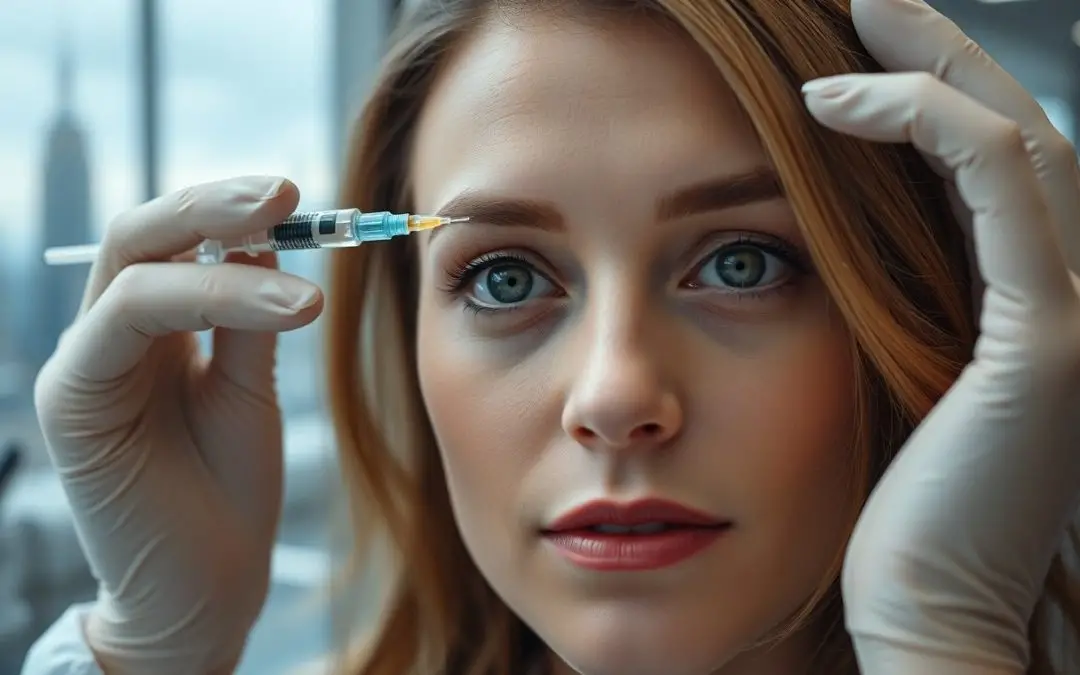
There’s a practical, noninvasive path to refreshing your look in New York: Botox provides precise, medically supervised treatments that reduce wrinkles, balance facial expressions, and help you project confidence without surgery. You’ll learn how experienced providers assess your goals, tailor dosing for natural results, and manage recovery so your appearance reflects how you feel-refined, rested, and ready for daily life.
Botox offers you a minimally invasive option to reduce fine lines and restore a refreshed appearance, with experienced New York practitioners tailoring treatments to your facial dynamics; you can expect quick sessions, minimal downtime, and measurable results that enhance your confidence without surgery, while consultations ensure a personalized plan that balances safety, natural-looking outcomes, and realistic expectations.
Understanding Botox
You’ll see Botox used to soften dynamic lines by targeting specific facial muscles; onset is typically 3-7 days with peak effect around two weeks and results commonly lasting 3-4 months. In New York clinics, providers often treat glabella, forehead, and crow’s feet with precise dosing to smooth lines while preserving your natural expression.
What is Botox?
Botox (onabotulinumtoxinA) is a purified neurotoxin that temporarily inhibits muscle contraction; you receive measured units-for example, about 20 units is a common total for glabellar lines-to reduce wrinkles without surgery. The product was FDA-approved for glabellar lines in 2002 and is frequently used off-label for forehead lines, crow’s feet, and neck bands.
The Science Behind Botox
It works by blocking acetylcholine release at the neuromuscular junction so targeted muscles relax and overlying skin smooths; you typically notice changes within days and peak effect at two weeks. Clinical trials demonstrated significant wrinkle reduction versus placebo, and adverse events are usually mild-bruising or temporary eyelid droop-when treatments are performed by trained clinicians.
Dose, volume, and placement determine outcomes: for example, five-site glabellar injections totaling ~20 units differ from lighter lateral dosing for crow’s feet. You should know product characteristics vary-Dysport may diffuse more, Xeomin lacks accessory proteins-and antibody-mediated resistance remains uncommon (<1%), especially with standard cosmetic dosing and proper technique.
Understanding Botox
You should know Botox is a precision tool in aesthetic medicine, offering non-surgical smoothing of dynamic wrinkles by targeting muscle movement; FDA approval for glabellar lines arrived in 2002 and millions of procedures are performed yearly in the U.S., so standards and protocols are well-established. In practice you and your provider plan treatments around onset, typical duration, and area-specific dosing to balance natural expression with visible reduction of lines.
What is Botox?
Botox is onabotulinumtoxinA, a highly purified protein derived from Clostridium botulinum, formulated for intramuscular injection to reduce unwanted muscle contractions. You receive measured units that temporarily reduce activity in targeted facial muscles-commonly the glabella, forehead, and crow’s feet-so dynamic creases soften without surgery, often within days and with predictable, repeatable outcomes.
How Botox Works
When injected, Botox blocks acetylcholine release at the neuromuscular junction, causing a temporary, reversible reduction in muscle contraction; you’ll typically notice improvement within 3-7 days, with maximal effect around two weeks and benefits lasting roughly 3-4 months. Treatment planning uses these timelines so you can schedule touch-ups to maintain results without losing natural facial movement.
Dosage and technique matter: typical cosmetic dosing ranges from about 10-50 units depending on the area and your muscle strength, with glabellar treatments commonly around 20 units. You’ll find outcomes vary by muscle mass, metabolic rate, and prior exposure-patients with heavier musculature may need slightly higher units or more frequent sessions. Side effects are usually mild (bruising, localized tenderness), while rarer issues like eyelid ptosis occur in a small percentage; discussing your anatomy and goals with a certified injector helps minimize risks and tailor the session to your needs.
Benefits of Botox in New York
You get predictable, natural-looking smoothing with minimal recovery; typical injections take 10-15 minutes, effects appear in 3-7 days and usually last 3-4 months. Many New York clinics combine Botox with topical skincare or fillers for targeted results, and tailored dosing (for example ~20 units for glabellar lines) lets you control outcomes without surgery, reducing lines while preserving facial expression and confidence.
Non-Surgical Confidence Boost
You can see subtle but meaningful changes that boost your presence-one 38-year-old client at a Midtown clinic used 20 units across the glabella and reported a noticeable softening of frown lines and increased self-confidence for a job interview within two weeks. Because Botox targets muscle movement rather than skin itself, you maintain facial dynamics while presenting a fresher, more rested appearance.
Quick and Convenient Treatment
Appointments typically last 10-15 minutes, so you can schedule before work and return to your day immediately; mild redness or tiny bruises fade within 24-48 hours, and providers ask that you avoid vigorous exercise for 24 hours. Expect to feel only brief pinpricks, with topical numbing used if you want added comfort.
Before injections you’ll have a focused consultation and injection map; common dosing is about 20 units for glabellar lines and 10-24 units for crow’s feet, with a two-week follow-up for adjustments. Many New Yorkers budget $300-$800 per treated area; scheduling routine maintenance every 3-4 months keeps results consistent.
Benefits of Botox
Non-Surgical Solution
Minimal downtime makes it ideal: treatments typically take 10-20 minutes in-office, require no anesthesia, and you can return to work immediately. You’ll usually notice softening of dynamic lines within 3-7 days, with peak effect at two weeks and results lasting about 3-4 months. Because you avoid incisions and general anesthesia, risks and recovery are far lower than surgery, and many patients schedule two to three touch-ups per year to maintain results.
Boosting Confidence
Softening frown lines and crow’s feet changes how your face reads, and you often feel more approachable and energetic after treatment. You may hear colleagues call you “refreshed”; a typical patient returns every 3-4 months to sustain that effect, which reinforces a positive self-image. Predictable, visible results help you smile and engage more naturally in social and professional settings.
Beyond appearance, you can experience behavioral shifts: many patients report greater willingness to attend events, update professional photos, or speak up in meetings once they feel less self-conscious. In practice, targeting key areas-glabella for a less stern look, lateral brows for a softer gaze-delivers outcomes that directly influence how others perceive your confidence, so discuss specific goals with your provider.
Choosing a Qualified Provider
You should seek a board-certified dermatologist or plastic surgeon, or a licensed injector (NP/PA/RN) with focused aesthetic training and documented experience. Ask for before-and-after galleries and patient references, verify an in-office, sterile setup, and confirm they perform hundreds of Botox treatments annually. Expect realistic dosing: glabella often 15-25 units, forehead 10-20, crow’s feet 5-15 per side. Providers who explain anatomy, dilution, and emergency plans deliver safer, more predictable results.
Importance of Expertise
You want an injector with deep facial anatomy knowledge and steady technique, which reduces asymmetry and eyelid ptosis risk. Many experienced clinicians have 3-5 years in aesthetics and perform 50-300 Botox procedures monthly, building consistent outcomes. They should explain neuromuscular dosing, diffusion control, and contingency plans for complications, and present clear before-and-after examples so you can judge technique and natural-looking results.
Questions to Ask Your Injector
You should ask whether they are board-certified and how many Botox injections they’ve performed, what unit count they’d use for your glabella/forehead/crow’s feet, how they reconstitute 100 units, what their complication and follow-up policies are, whether two-week touch-ups are included, and to see recent, unfiltered before-and-after photos and patient reviews.
You should probe specifics: if they recommend 20 units for your glabella or 15 for the forehead, ask why-muscle strength and goals drive dosing. Verify reconstitution examples (100 units in 2.5 mL yields 4 units per 0.1 mL) so you understand concentration and dose precision. Confirm a two-week review for adjustments, get written consent listing side effects, and compare per-unit versus per-area pricing to avoid surprise charges.
The Botox Procedure
You’ll start with a focused assessment where your provider maps muscles and discusses goals, then treatment typically takes 10-30 minutes. Providers use very fine needles to inject measured units-commonly 10-30 units for the forehead, 15-25 for the glabella, and 5-15 per side for crow’s feet-adjusted to your muscle strength. Local numbing is optional, antiseptic applied, and immediate activity return is common; sterile technique and precise placement determine natural-looking results.
What to Expect
Before injections you’ll have photos and markings; injections feel like quick pinpricks and most sessions include 10-20 microinjections. Mild redness or pinpoint bleeding occurs in about 5-15% of cases, manageable with ice. You usually notice smoothing at 3-7 days, with peak effect at 10-14 days, and results lasting roughly 3-4 months-many patients schedule touch-ups at three months to maintain continuous improvement.
Aftercare and Recovery
After treatment avoid rubbing or massaging treated areas for 24-48 hours and stay upright for four hours to prevent migration of product. Skip strenuous exercise and alcohol for 24 hours, apply ice for 10 minutes to control swelling, and you can wear makeup immediately if injection sites aren’t bleeding. Mild headache or temporary droop can occur; if new vision changes, severe difficulty breathing, or swallowing happen, seek immediate medical care.
To manage bruising, apply arnica montana gel twice daily or topical vitamin K cream-many clinics provide these or recommend oral arnica starting the night of treatment. If you see asymmetry or persistent weakness after 14 days, schedule a follow-up for possible small corrective injections; practitioners typically reserve 10-14 days post-treatment for touch-ups. Keep a treatment log of units and areas so you and your injector refine dosing for optimal, individualized outcomes.
The Botox Procedure
What to Expect During Treatment
Your injector will map targeted muscles and mark injection points, then deliver small doses with a fine needle; for glabellar lines you’ll commonly receive about 20 units across five sites, while crow’s feet often use ~12 units (6 per side). The visit usually takes 10-20 minutes, topical numbing or ice can lessen discomfort, and you’ll feel only brief pinches before leaving-many patients return to work immediately afterward.
Aftercare and Recovery
After treatment you should stay upright for four hours, avoid rubbing or massaging treated areas for 24 hours, and skip strenuous exercise and alcohol for 24 hours to limit spread and bruising; initial effects appear in 3-5 days, full results by two weeks, and benefits typically last 3-4 months.
If mild bruising occurs-reported in roughly 5-20% of patients-it usually fades within 7-14 days; applying cold in the first 24 hours and using arnica or topical vitamin K can help, while avoiding NSAIDs or supplements that thin blood (aspirin, fish oil) reduces risk. Your provider may schedule a two-week follow-up to confirm results and offer a touch-up if needed within that window.
Choosing a Provider in New York
Qualifications to Look For
Prioritize board-certified dermatologists or plastic surgeons licensed in New York, with at least 2-5 years of injectable experience and a portfolio of before-and-after photos. Verify training in facial anatomy and emergency management for rare vascular occlusion so you know they’re prepared. Choose clinics that document how many Botox units they administer per treatment; many experienced injectors log 1,000+ units annually. Also confirm the facility is in a medical setting with proper sterile protocol and clear follow-up policies.
Questions to Ask
Ask how many Botox units they recommend for your specific concerns-for example, glabellar lines often require 20-30 units, crow’s feet 6-12 per side-and what their complication and revision rates are. Confirm cost per unit (New York typically ranges $12-$20), the expected onset and duration, and whether a touch-up or refund policy exists. Also check availability for 48-72 hour and two-week follow-ups.
Probe into their complication management by asking for examples of handling eyelid droop or bruising and whether they carry hyaluronidase or have on-call support. Request patient references, specific case studies showing correction of asymmetry, and photographic baselines. If you take blood thinners or have neuromuscular conditions, disclose them to receive tailored dosing. Finally, confirm how outcomes are measured-standardized photos at baseline and two weeks help track results objectively.
The Cost of Botox
Pricing Factors in New York
Prices vary widely based on provider credentials, neighborhood rent, units required, and the brand used; Manhattan clinics commonly charge $15-$20 per unit while outer-borough practices run $10-$15. Typical treatment ranges: forehead 10-30 units, glabella 15-30 units, crow’s feet 6-20 units total, and flat-area fees often fall between $300-$800. High-volume practices sometimes undercut boutique clinics, but experience and technique directly affect outcomes and safety.
- Provider expertise and board certification – more experience often means higher fees.
- Clinic location and overhead – Midtown/SoHo clinics carry premium pricing.
- Units required per area – e.g., a 30‑unit session vs a 10‑unit touch-up changes cost significantly.
- Product brand and dilution – Botox® versus other neuromodulators can shift per‑unit pricing.
- Knowing a 30‑unit treatment at $15/unit equals about $450 helps you compare quotes and budget.
Financing Options
You can split payments with CareCredit, third‑party medical lenders, in‑office plans, or membership programs; CareCredit commonly offers 6-12 months 0% APR promos, while in‑house plans often allow 3-6 monthly installments. For example, a $450 session divided over six months is roughly $75/month. Package deals (buy three, save 10-20%) and subscription plans reduce per‑treatment cost and smooth budgeting.
Eligibility for CareCredit or clinic financing usually requires a quick credit check, and promotional 0% offers convert to regular APRs (often 10-30%) if you miss payments, so you should read terms closely; some clinics set up automatic monthly billing while others require manual payments. You may also use a rewards credit card, but compare interest rates and benefits: financing a $600 treatment over 12 months at 0% yields $50/month, whereas a standard card at 20% APR would cost significantly more in interest.
Common Myths and Misconceptions
Many persistent beliefs misrepresent Botox: it doesn’t permanently paralyze you or erase all expression. Typical treatment parameters are clear-about 20 units for glabellar lines and 5-15 units per side for crow’s feet-and effects usually last 3-4 months. Millions of neurotoxin treatments are performed annually in the U.S., and when targeted injections are combined with conservative dosing and follow-up, you get softened lines with preserved movement rather than a mask-like result.
Debunking Myths
You won’t be frozen if your injector tailors doses to your facial anatomy; preserving orbicularis and frontalis function keeps natural expression. Men represent roughly 10% of cosmetic neurotoxin patients, so it’s not exclusively feminine. Botox Cosmetic is FDA-approved for glabellar lines, and systemic poisoning is effectively impossible at therapeutic doses-lethal exposure would require amounts orders of magnitude above cosmetic use.
Understanding Risks
Side effects are usually local and transient: mild bruising, headache, temporary eyelid ptosis or asymmetry can occur, typically appearing within days and resolving over weeks to a few months; serious systemic effects are rare. You should avoid treatment if pregnant, breastfeeding, or if you have neuromuscular disorders such as myasthenia gravis, and disclose all medications to your provider to assess safety.
You can lower complications by choosing a board-certified injector who documents doses, marks anatomy, and reviews your medical history. If you’re on anticoagulants or supplements that increase bleeding, your clinician may advise pausing them 7-10 days before treatment if it’s safe for you. Post-care-avoiding vigorous exercise or rubbing the area for 24 hours and applying cold to bruises-reduces common side effects; report any progressive weakness or breathing difficulties immediately.
Potential Risks and Side Effects
Common Reactions
You can expect mild, short-lived effects like injection-site bruising and swelling (seen in roughly 10-20% of patients), transient redness, and headaches (about 5-15%). Some experience localized muscle weakness or asymmetry; eyelid or brow droop occurs in roughly 1-3% of cosmetic treatments. Most reactions peak within 24-48 hours and improve over 3-14 days with basic care such as cold compresses and arnica.
When to Seek Medical Advice
If you develop difficulty breathing, swallowing, speaking, or progressive muscle weakness, seek emergency care immediately because these may indicate distant toxin spread. Also contact your provider if redness, warmth, increasing pain, pus, or fever above 100.4°F appear near injection sites, or if drooping or asymmetry persists beyond two weeks despite conservative measures.
Further action can include topical apraclonidine drops for eyelid ptosis, oral NSAIDs for headache, and antibiotics if infection is suspected; your injector should provide a 24‑hour contact and will document adverse events. Severe systemic signs warrant ER evaluation and supportive treatment, while most localized reactions resolve within 7-14 days with simple interventions.
Alternatives to Botox
You can choose dermal fillers (hyaluronic acids like Juvederm or Restylane) to restore volume for 6-18 months, chemical peels and laser resurfacing to improve texture and pigmentation over 3-6 months, microneedling (3-6 sessions spaced 4-6 weeks) for collagen induction, PRP to boost healing, and Kybella for submental fat with 2-4 sessions; these target structure or skin quality issues Botox won’t address.
Other Non-Surgical Treatments
You might consider energy-based options: Ultherapy (HIFU) is FDA-cleared for lifting with results developing in 2-3 months from a single session, radiofrequency treatments (Thermage, Profound) tighten with 1-3 sessions, and IPL or fractional lasers treat pigment and vascular issues in 1-4 visits; combining microneedling with PRP often enhances collagen remodeling while minimizing downtime compared with deep resurfacing.
When to Consider Surgery
When sagging is severe-marked jowling, excess neck skin, or platysmal bands-or when volume loss and laxity persist despite multiple non-surgical treatments, you should consider surgical options such as blepharoplasty, facelift, or necklift, which reposition tissue and fascia for structural change and commonly deliver results lasting 7-15 years.
During a surgical consultation you’ll have photos, an assessment of skin quality and bone structure, and a discussion of goals; anesthesia can be local with sedation or general, initial swelling/bruising typically lasts 1-4 weeks, and most patients resume social activities in 2-6 weeks; surgeons frequently combine fat grafting or eyelid surgery with facelifts to address contour and achieve more durable, natural outcomes.
To wrap up
With this in mind, Botox in New York offers a non-surgical path to renewed confidence, allowing you to smooth lines, refresh your appearance, and maintain natural expression with minimal downtime; consult a licensed specialist to tailor treatment to your facial dynamics and goals so you can look and feel more self-assured without invasive procedures.
Conclusion
Upon reflecting on Botox in New York, you can recognize how a non-surgical treatment can restore a refreshed appearance and boost your confidence with minimal downtime when performed by experienced providers; by seeking a thorough consultation, setting realistic expectations, and following professional aftercare, you protect your safety and optimize lasting, natural-looking results.