
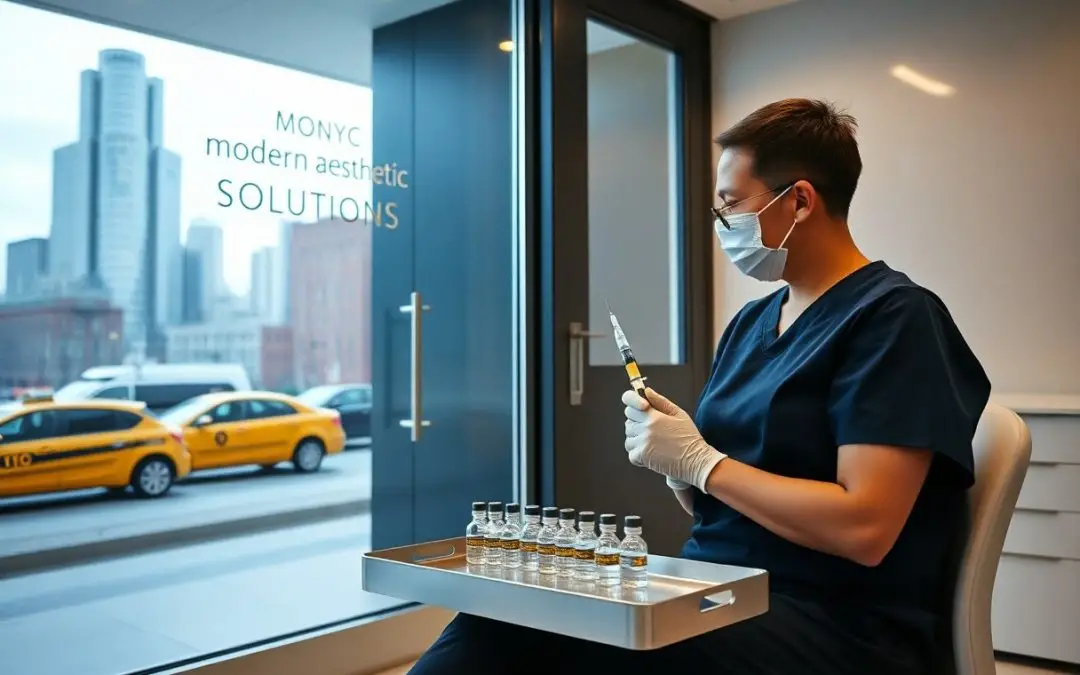
Many New Yorkers choose Botox as a precise, minimally invasive option to smooth dynamic lines and refresh appearance; you can expect personalized treatment plans from experienced, board-certified injectors who prioritize safety, natural-looking results, and clear aftercare guidance. Your consultation will assess goals, candidacy, potential side effects, and realistic timelines for optimal outcomes.
Understanding Botox
You’ll find Botox acts as a targeted neuromodulator that softens dynamic lines with a quick office procedure (typically 10-20 minutes) and minimal downtime; most patients notice effects in 3-7 days, peak at about two weeks, and expect results to last roughly 3-4 months, with variability based on muscle strength, dose, and metabolism.
What is Botox?
Botox is onabotulinumtoxinA, a purified neurotoxin used in minute, controlled doses to temporarily relax specific facial muscles; it’s FDA-approved for glabellar lines and widely applied off-label for forehead lines, crow’s feet, hyperhidrosis, and select therapeutic indications like chronic migraine and muscle spasm.
How Botox Works
By blocking acetylcholine release at the neuromuscular junction, Botox prevents the signal that causes muscle contraction, so you get reduced movement in targeted muscles and a smoother surface appearance without affecting sensation; onset is usually days, not hours, and effects are reversible as nerve terminals regenerate.
You should note dosing and technique matter: practitioners tailor units and injection sites to your muscle mass-glabellar treatments often fall in the low‑tens of units while larger frontalis muscles need more-and use precise dilution, depth, and small volumes to limit diffusion; antibody formation is rare (<1%), and factors like prior treatments, metabolic rate, and injection accuracy determine duration and outcome.
Benefits of Botox
You reap both aesthetic and therapeutic rewards: smoothing dynamic wrinkles, reducing excessive sweating, lowering migraine frequency, and easing muscle spasms. Treatments are quick-often 10-15 minutes-with effects beginning in 3-7 days, peaking by two weeks, and typically lasting about 3-4 months so you can schedule maintenance predictably.
Aesthetic Improvements
Targeted injections soften glabellar lines, crow’s feet, and forehead creases; typical glabellar dosing is ~20 units. Results appear within days and generally last 3-4 months, letting you time touch-ups seasonally. Many patients combine Botox with fillers or lasers to address volume loss and skin texture for a more complete facial refresh.
Medical Applications
FDA-approved indications include chronic migraine (approved 2010), cervical dystonia, severe primary axillary hyperhidrosis, and overactive bladder; clinicians also use Botox off-label for bruxism and spasticity. You’ll often notice measurable symptom relief within weeks, and maintenance intervals commonly range from 10 to 12 weeks depending on the condition.
For chronic migraine, the PREEMPT trials showed roughly 50% of patients achieving ≥50% fewer headache days using 155-195 units across 31 sites every 12 weeks. In axillary hyperhidrosis studies, a single 50-unit injection per underarm produced sweat reductions >80%. Your provider’s dosing and technique directly affect outcomes and side-effect risk, so choose an experienced injector.
The Botox Procedure
Your provider will map targeted muscles, cleanse the skin, and use a fine 30-32G needle to deliver multiple micro-injections; most sessions take 10-20 minutes. Injection counts vary-3-20 points depending on areas treated-and typical dosing examples are glabellar lines ~20 units, forehead 10-20 units, and crow’s feet 6-12 units per side. You may get topical numbing or ice; sterile technique and precise placement minimize diffusion and optimize natural-looking results.
What to Expect
You’ll feel brief pinpricks and can return to normal activity the same day in most cases. Onset usually begins at 3-7 days with maximal effect at 10-14 days and benefits lasting about 3-4 months. A small portion of patients-roughly 10-15%-experience mild bruising or swelling. Your clinician will schedule a 2-week follow-up to assess symmetry and consider minor touch-ups if needed.
Aftercare and Recovery
You should avoid rubbing or massaging treated sites for 24 hours and stay upright for about 4 hours to limit product migration. Refrain from strenuous exercise and excessive heat (sauna, hot yoga) for 24-48 hours, and limit alcohol and NSAIDs for 24 hours if possible to reduce bruising. Expect minimal downtime-ice, acetaminophen if needed, and over-the-counter arnica can help minor bruises; contact your provider for any unexpected eyelid or eyebrow droop.
For practical steps, apply a cold compress for 10-15 minutes immediately after treatment and intermittently during the first few hours to reduce swelling. If a bruise appears, topical arnica or bromelain and gentle cold-to-warm transitions over 48-72 hours often accelerate resolution. Avoid facial treatments (chemical peels, microneedling, intense pulsed light) for at least 48-72 hours, and book the 2-week review to document results and plan any adjustments.
Choosing a Provider in NYC
Qualifications and Experience
You should prioritize board-certified dermatologists or plastic surgeons licensed in New York, ideally with 3-5+ years focused on injectables. Ask how many Botox treatments they’ve performed-clinics reporting >1,000 cases or showing extensive before-and-after galleries give clear performance data. Confirm whether the injector is physician-led, their complication rate, and ongoing training in facial anatomy and neuromodulator techniques.
Importance of Consultations
During a 20-40 minute consultation you and your provider will map injection sites, review medical history and medications (e.g., anticoagulants), and agree on goals; typical dosing examples include glabellar ~20 units, forehead 10-30 units, and crow’s feet 5-15 units per side. Expect photographic documentation, written consent, and a documented treatment plan with risks discussed.
Follow-up planning matters: ask for a 1-2 week review to assess onset (3-7 days) and peak at ~2 weeks, with adjustments if needed; many NYC practices offer complimentary touch-ups within 14 days. Also confirm emergency contact procedures, aftercare instructions (avoid heavy exercise 24 hours, no rubbing treated areas), and how they handle rare complications like ptosis or localized weakness.
Potential Risks and Side Effects
Expect a range of predictable responses after treatment: most are mild and self-limited, resolving within days to a few weeks, while serious events are uncommon. You may see injection-site bruising (about 5-15%), transient headache (1-11%), or temporary muscle weakness; patients with neuromuscular disorders face higher risk. If you develop progressive weakness, difficulty breathing, or swallowing, seek immediate care-these signs, though rare, require urgent evaluation and sometimes hospitalization.
Common Side Effects
Within 24-72 hours you may notice redness, swelling, pinpoint bruising that typically clears in 7-14 days, and mild headache that resolves in 24-48 hours. Small, temporary asymmetries or eyelid droop can occur when nearby muscles are affected, usually improving over 2-6 weeks. Conservative care-ice, acetaminophen, arnica, and avoiding blood thinners for a few days-often speeds recovery for these predictable effects.
Rare but Serious Risks
On rare occasions Botox can spread beyond the injection site, producing ptosis (reported up to ~2% after glabellar injections) or distant muscle weakness that impacts swallowing or breathing; post-marketing surveillance shows severe systemic events occur very infrequently (well under 0.1% in large series). You must contact your provider immediately if you experience progressive dysphagia, aphonia, or respiratory trouble following treatment.
Management options for serious effects include topical apraclonidine or oxymetazoline drops for symptomatic relief of eyelid ptosis, which may shorten appearance within days though full recovery can take weeks to months. Case reports describe dysphagia onset days to weeks post-injection requiring speech/swallow evaluation, diet modification, or, rarely, inpatient support. You lower your risk by disclosing neuromuscular disease, recent infections, and all medications so your injector can adjust dose and injection sites appropriately.
Alternatives to Botox
Other Injectable Treatments
If you prefer options beyond Botox, neuromodulators like Dysport and Xeomin act similarly with onset in 24-72 hours and effects lasting about 3-4 months. Fillers such as hyaluronic acid (Juvederm, Restylane) restore volume for 6-18 months, while Sculptra stimulates collagen over 2-4 sessions spanning several months. For submental fullness, Kybella usually requires 2-4 treatments, and PRP uses your own plasma to improve texture and tone.
Non-Invasive Options
When you want to avoid needles, energy-based treatments can tighten and resurface: Ultherapy (focused ultrasound) produces lift peaking at 2-3 months, radiofrequency devices (Thermage, Morpheus8) firm skin with 1-3 sessions, and IPL or chemical peels treat pigmentation and texture with minimal downtime, letting you balance results against recovery time.
Many non-invasive protocols combine modalities: for example, 3 RF microneedling sessions spaced 4-6 weeks often improve laxity and scarring, while non‑ablative fractional lasers typically need 3-5 sessions for visible change with light downtime; clinical data report Ultherapy measurable lift in about 60-70% of patients at 90 days, so align your expectations with device-specific timelines and skin type.
Summing up
Summing up, Botox in NYC offers precise, modern aesthetic solutions that let you reduce dynamic lines, customize treatments, and achieve natural-looking results with minimal downtime. By selecting experienced providers and understanding treatment options, you can tailor injections to your facial anatomy and goals, balancing safety and efficacy while maintaining expressive movement. Ongoing follow-up and maintenance ensure outcomes align with your expectations.