
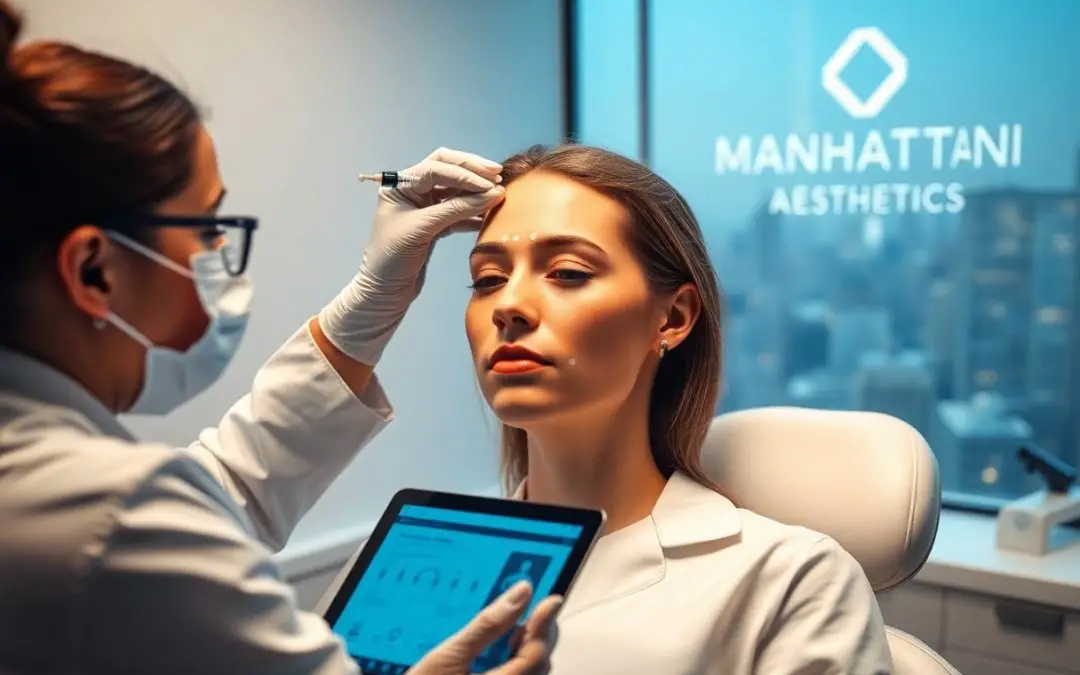
Over time, you may want subtle, tailored improvements to reflect your features; at the Botox Manhattan Clinic you receive a personalized plan that aligns with your aesthetic goals and lifestyle. Experienced clinicians evaluate your facial anatomy, adjust dosing and injection sites for natural-looking results, and provide clear guidance on safety, recovery, and follow-up. You benefit from focused expertise in achieving refined, individualized outcomes rather than a one-size-fits-all approach.
Understanding Botox
Within your treatment plan this section focuses on mechanism, dosing, and expected timelines so you can set realistic goals. Botox sessions usually last 10-20 minutes and are tailored to your muscle strength and facial anatomy. You’ll often notice initial changes in 3-5 days, peak effect at about two weeks, and plan follow-ups every 3-6 months depending on response and desired maintenance.
What is Botox?
Botox is onabotulinumtoxinA, a purified neuromodulator derived from Clostridium botulinum, FDA-approved for glabellar lines since 2002 and also used for chronic migraine and hyperhidrosis. Your clinician prescribes measured units from standardized vials and converts assessment of your dynamic muscle activity into a personalized dose to soften lines while preserving natural facial expression.
How Botox Works
It blocks acetylcholine release at the neuromuscular junction to reduce muscle contraction, which smooths dynamic wrinkles without altering resting skin texture. You typically see effects within 3-5 days, maximal benefit around two weeks, and durability of roughly 3-6 months before nerve terminals regenerate and you schedule retreatment to maintain results.
Dose, injection placement, and dilution govern spread and longevity; for example, glabellar treatments commonly use 20 units divided into five injection points (about 4 units each), while stronger depressor muscles may require higher totals. You should expect targeted weakening rather than paralysis; adverse events like eyelid ptosis are uncommon (<1%), and patients with faster metabolism or heavy muscle activity may need touch-ups at 3-4 months to sustain outcomes.
The Advantages of Choosing a Manhattan Clinic
Choosing a Manhattan clinic gives you access to high-volume practices, advanced technology and specialists trained at top institutions, often resulting in faster diagnoses and refined injector technique. You benefit from extended hours, same-week consults and integrated services-dermatology, aesthetics and minor surgical correction-so complex or combination treatments are coordinated efficiently. Clinics here commonly track outcomes and patient satisfaction, helping you expect predictable, measurable improvements rather than one-size-fits-all care.
Expertise and Experience
Manhattan clinics frequently employ board-certified dermatologists and plastic surgeons with 5-20+ years of injectable experience, many trained at centers like NYU or Columbia. Their caseloads include revision work and complex asymmetry corrections, so you gain from clinicians who’ve treated thousands of Botox patients and handled complications such as ptosis or uneven dosing. That depth of experience lets them anticipate risks and tailor techniques-depth, angle and dilution-to your anatomy.
Personalized Treatment Plans
Providers perform a dynamic facial assessment and map treatment by muscle activity and skin quality, then recommend dosing ranges-commonly 10-30 units for forehead, 15-25 for glabellar, and 5-15 per side for crow’s feet-adjusted for sex, muscle mass and prior response. Your plan often includes staged injections, photographic documentation and a two-week follow-up to fine-tune placement and units based on real response rather than a single standardized protocol.
In practice, personalization extends to combination therapies and maintenance scheduling: clinics commonly pair lower-dose Botox with neuromodulator microdoses, filler or skin-resurfacing for synergistic results, and set maintenance intervals of about 3-4 months. Expect providers to log your dose-response, adjust future sessions by roughly 10-20% as needed, and offer clear retreatment timelines so your results evolve predictably with your goals.
The Botox Procedure
Consultation Process
You’ll have a 15-30 minute consultation where the clinician reviews your medical history, prior neuromodulator use, medications (including anticoagulants), and pregnancy status, then assesses dynamic lines at rest and in motion. They’ll take photos, map target muscles, estimate units and cost (e.g., glabella 15-25 units), outline contraindications like neuromuscular disorders, and obtain informed consent while setting a two-week follow-up to evaluate results.
What to Expect During Treatment
You’ll recline while the provider cleans the skin and, if preferred, applies topical anesthetic or ice; injections typically take 10-20 minutes with a 30-32 gauge needle and feel like brief pinches. Typical dosing ranges: glabella 15-25 units, forehead 4-30 units, crow’s feet 6-15 units per side. Effects begin in 3-7 days, peak at two weeks, and usually last 3-4 months.
After treatment, avoid aspirin, NSAIDs, and alcohol for 24-48 hours to reduce bruising, and don’t rub or massage injected areas for 24 hours. Mild swelling or pinpoint bruises occur in up to about 10% of patients; asymmetric results or eyelid ptosis are rare (generally under 1% with experienced injectors). A two-week check lets your clinician add a small touch-up (commonly 2-5 units) if needed, and many patients return every 3-4 months to maintain the effect.
Post-Treatment Care
After your injection, follow specific steps to optimize results: expect onset within 3-7 days and peak at about 10-14 days, with effects typically lasting 3-4 months. You’ll have a 2-week follow-up to assess outcomes and adjust dosing. Keep a treatment log and standardized photos to document how your muscles respond over time.
Immediate Aftercare
Within the first 24 hours, avoid rubbing or massaging treated areas, skip vigorous exercise, and remain upright for at least 4 hours; apply ice in 10-15 minute intervals to reduce swelling. Mild bruising occurs in roughly 5-15% of patients depending on technique. Contact your clinician if you develop increasing pain, pronounced asymmetry, or eyelid droop.
Long-Term Maintenance
Typically you’ll schedule repeat treatments every 3-4 months, though some patients extend to 4-6 months as muscle tone changes; many clinics reduce total units by 10-30% over a year when gradual improvement occurs. Track progress with photos and a dosing log so your provider can tailor future sessions and unit counts precisely to your goals.
Also factor in adjunctive care: combine neuromodulator maintenance with consistent SPF, topical retinoids, or occasional laser/filler procedures to address static lines and prolong results. Be aware metabolic factors like smoking or high activity can shorten duration, so you might need more frequent visits and a personalized schedule; typical session costs range from about $300-$800 depending on units and treated areas.
Cost and Financing Options
Fees in Manhattan span widely: per-unit rates typically run $12-$20, with total sessions often $300-$1,000 depending on treated areas and units used. You can lower costs through package pricing, memberships, and seasonal promotions; for example, a three-treatment package that reduces the per-session fee by 15-20% can save $150-$300 annually. Ask the clinic for an itemized quote showing units, injection sites, and follow-up tweak policies.
Understanding Pricing
Pricing reflects unit cost, dosing, and injector expertise: forehead treatments commonly use 10-30 units, glabellar frown lines 20-25 units, and crow’s feet 5-15 units per side. At $15/unit, treating glabellar lines (20 units) totals about $300, while a forehead-plus-frown session (40-60 units) ranges $480-$900. Compare board-certified injector fees, sanitation standards, and whether touch-up visits are included.
Insurance and Payment Plans
Cosmetic Botox is generally paid out-of-pocket, whereas medical indications like chronic migraine or hyperhidrosis may be covered with prior authorization and supporting documentation. You can use healthcare credit (CareCredit, Affirm), clinic payment plans, or membership programs that split costs monthly; memberships often reduce per-session pricing by 10-20%, and some financing options offer 6-12 month interest-free terms subject to approval.
If you pursue insurance coverage for medical Botox, start with a specialist referral and documentation of diagnosis and prior treatment attempts so the clinic can submit a prior authorization and expected dosing. Even with approval you may owe deductibles or coinsurance-policies commonly leave you responsible for 10-30%-so a $1,200 billed treatment could result in $120-$360 out-of-pocket. Ask the clinic to run benefits verification before scheduling to clarify your liability and available payment-plan combinations.
Patient Testimonials and Success Stories
Real Results from Local Patients
You’ll see concrete examples: a 45-year-old received 25 units in the glabella and noticeable softening of frown lines within 7 days, while a 32-year-old had 10 units per side at the crow’s feet with a reported 50% reduction in lines at two weeks; our before-and-after photos and a case study of a client who maintained results with touch-ups every 3-4 months over a year illustrate typical dosing, timelines, and satisfaction you can expect.