
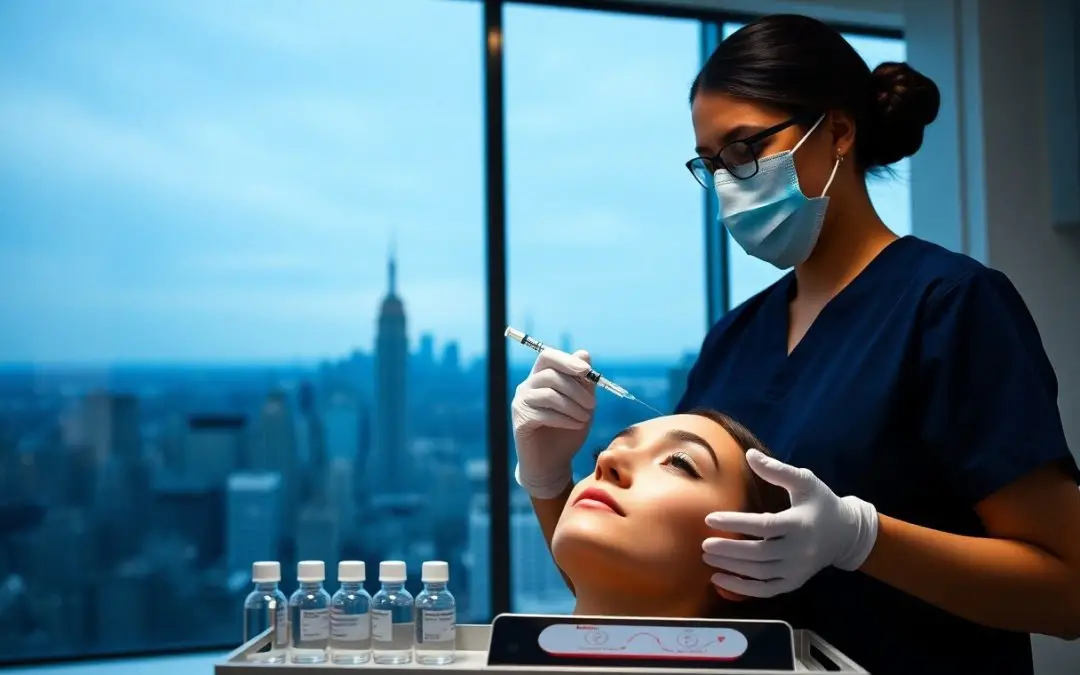

Most New Yorkers seeking Botox want natural results, and you benefit from providers who tailor conservative dosing, precise placement, and targeted follow-up to preserve your facial expressions while smoothing lines; your consultation should assess anatomy, goals, and a clear treatment plan so outcomes look refreshed, not overdone.
Understanding Botox
Botox (onabotulinumtoxinA) has been FDA‑approved for glabellar lines since 2002 and is widely used off‑label for forehead lines and crow’s feet; you can expect visible softening within 3-7 days and typical duration of 3-4 months. Dosage, injection pattern, and dilution determine natural-looking results, so your provider’s technique and anatomy knowledge matter.
What is Botox?
Botox is a purified neurotoxin formulated in 100‑unit vials and used for both cosmetic and medical indications; you’ll often see vials reconstituted with 1-2 mL saline. Cosmetic regimens commonly use 20-50 units for the upper face-precise unit counts vary by muscle strength, gender, and individual anatomy.
How Botox Works
Botox blocks acetylcholine release at the neuromuscular junction, temporarily reducing muscle contraction so dynamic wrinkles soften while your skin texture remains intact. You’ll typically notice onset in days, peak effect by two weeks, and gradual return of movement over 3-4 months as nerve terminals regenerate.
Technique details influence outcomes: injecting intramuscularly with a 30-32 gauge needle at multiple micro‑points limits diffusion to roughly a 1 cm radius per bolus. You should know dilution affects spread-more saline increases diffusion-so your injector tailors volume and units; for example, a patient with strong corrugators might receive 4-6 injection points totaling 20-30 units for balanced relaxation without brow ptosis.
The Importance of Natural Results
Natural results keep your facial expressiveness intact while addressing lines, using conservative dosing and precise placement; for example, typical dosing ranges-10-20 units for forehead, 20 units for glabella, 6-12 units per side for crow’s feet-help maintain movement and reduce visible stiffness, so you look refreshed rather than altered.
The Avoidance of Over-Treatment
Over-treatment can cause a frozen look or brow descent, so you should start low and reassess-many injectors begin with 10-15 units in the frontalis or split treatment into two sessions; follow-up at two weeks allows you to fine‑tune doses based on your response and minimize complications.
Enhancing Your Unique Features
Targeted, low-volume injections can accentuate what you like about your face: a few units at the oral commissures can lift corners, 2-4 units to the depressor muscles soften a downturn, and precise lateral orbicularis injections preserve smiling motion while smoothing crow’s feet, tailoring results to your anatomy.
During assessment you’ll get a mapped plan-measuring muscle strength, noting asymmetries, and combining approaches when needed; for example, pairing 6-8 units per side for crow’s feet with 0.5-1.0 mL hyaluronic filler in the midface can restore support and enhance cheek contour while keeping expressions natural.
Choosing the Right Provider
You should prioritize board certification (American Board of Dermatology or Plastic Surgery), documented facial anatomy training, and a track record of 1,000+ Botox treatments or 3+ years focused on injectables; clinics in NYC often publish before/after galleries and patient reviews-compare ratings, complication disclosures, and whether they offer written treatment plans and clear follow-up policies before booking.
Qualifications and Experience
You want an injector with formal training and ongoing education-membership in ASDS or ASPS, cadaver or anatomy coursework, and 500-2,000 treatments yearly indicates active skill maintenance; ask for complication rates, examples of revision cases, and specific experience treating asymmetry, hyperhidrosis, or masseter reduction to match your goals.
Consultation and Customization
You should expect a structured consultation: medical history, facial photographs, and a dosing plan with examples-typical starting doses are about 20 units for glabellar lines, 10-30 for forehead, and 6-12 per side for crow’s feet; the injector should explain risks, expected timelines, and alternatives before any treatment.
During customization the provider should map your muscles, mark injection sites, and offer a staged approach-many injectors start 10-20% below a standard dose to preserve natural movement, then reassess at a 2‑week follow-up for fine-tuning; insist on documented consent, post-care instructions, and a clear plan for touch-ups or management of asymmetry.
Pre-Treatment Considerations
Health Assessments
You undergo a focused medical review covering neuromuscular disorders (eg, myasthenia gravis), pregnancy or breastfeeding status, prior reactions to botulinum toxin, and current medications-especially anticoagulants (aspirin, warfarin, clopidogrel) and supplements like fish oil or vitamin E that increase bruising risk. Providers also ask about recent facial surgery or infection and prior Botox within 3 months; standardized pre-treatment photos and muscle mapping (eg, 4 glabellar points ≈20 units) guide a safe, individualized plan.
Setting Realistic Expectations
You should expect onset at about 3-5 days, peak effect near two weeks, and typical duration of 3-4 months, with variability up to ~6 months after repeated treatments. Neuromodulators primarily soften dynamic lines-static creases often need fillers or resurfacing. Clinicians commonly start conservatively (eg, 10-20 units forehead, ~20 units glabella) and adjust based on your muscle mass and expression goals to preserve natural movement.
Staged dosing and a two-week follow-up are practical strategies: if you have strong corrugators, initial glabellar dosing may be 20-30 units across 4-6 injection points, whereas larger frontalis muscles sometimes require higher forehead dosing. You facing heavy brows risks eyebrow lowering if frontalis is overtreated, so your provider may place injections higher or use smaller doses laterally; masseter treatment for bruxism typically runs 20-30 units per side, and touch-ups at two weeks let you achieve balance without freezing your expressions.
The Botox Procedure
Step-by-Step Process
You begin with a 15-30 minute consultation to set goals and review medical history; after cleansing and optional topical numbing the provider maps injection points. Typical session lasts 10-20 minutes and uses 20-50 units depending on areas treated. Expect mild pinches; bruising occurs in about 10% of patients. See the table below for a quick timeline.
Typical Step Timeline
| Step | Time / Details |
|---|---|
| Consultation | 15-30 min – goals, meds, photos |
| Cleansing & Mapping | 5-10 min – mark injection sites, optional numbing |
| Injections | 10-20 min – 20-50 units typical (forehead, glabella, crows feet) |
| Immediate Post-Check | 5 min – ice, brief instructions |
| Follow-Up | 10-14 days – assess results, possible touch-up |
Aftercare Tips
After injections, you should avoid rubbing treated areas for 24 hours, refrain from vigorous exercise for 24 hours, and skip alcohol and NSAIDs for 24-48 hours to lower bruising risk. Onset typically appears in 3-5 days with maximum effect by 10-14 days; contact your provider for headaches or drooping that persist beyond 48 hours.
- Avoid massaging or applying pressure to injection sites for 24 hours.
- Apply ice intermittently during the first 12 hours to minimize swelling.
- Delay facial treatments (microneedling, chemical peels, lasers) for at least 2 weeks.
- Thou contact your injector within 7 days if you notice persistent asymmetry, severe pain, or vision changes.
If you take blood thinners or have a history of cold sores, tell your injector beforehand; antiviral prophylaxis is often used before perioral injections. Clinical data suggest topical arnica started within 24 hours can reduce bruising by ~30%, and a two-week follow-up lets your provider adjust dosing-commonly up to 10 additional units when needed.
- Sleep with your head elevated the first night to reduce swelling.
- Avoid heavy alcohol intake for 24-48 hours to lessen bruising risk.
- Use gentle cleansers and avoid scrubs on treated areas for 48 hours.
- Thou contact your clinic immediately for signs of infection, increasing redness, or worsening vision.
Addressing Common Concerns
You can expect natural-looking movement when injections target specific muscles and doses are tailored to your anatomy; most patients report minimal discomfort with topical numbing or ice, and downtime is typically 0-48 hours. Minor bruising occurs in about 10-20% of cases and fades within a week, while onset of smoothing appears in 3-7 days and peaks around two weeks, letting you plan treatments around events confidently.
Safety and Side Effects
You should know common effects include mild swelling, redness, headache, or a bruise, with transient ptosis being rare (under 1% with proper technique). Using FDA-approved formulations and a board-certified injector reduces risk, and contraindications include pregnancy, breastfeeding, and neuromuscular disorders. If you experience unusual symptoms beyond a week, contact your provider for assessment and supportive care.
Duration of Results
You’ll typically see results last about 3-4 months, though some people sustain effects for 4-6 months depending on dose and muscle activity. Onset begins within 3-7 days and reaches maximum effect by 10-14 days, so plan follow-up treatments on a roughly 3-4 month schedule to maintain smoothing without over-treating.
Factors that influence how long your results last include the injected units (for example, glabellar treatment often uses ~20 units), muscle mass and metabolism, and treatment history-serial treatments can lengthen duration. Clinical studies generally report a median effect around 3-4 months, and many patients who receive tailored dosing and regular maintenance extend intervals to 4-6 months over time.
Conclusion
Hence you can trust NYC Botox care tailored to preserve your natural expressions while addressing lines and volume loss. Providers prioritize individualized assessment, precise dosing, and conservative placement so your results appear refreshed, not altered. With proper follow-up and technique, you maintain authenticity while achieving subtle rejuvenation.