
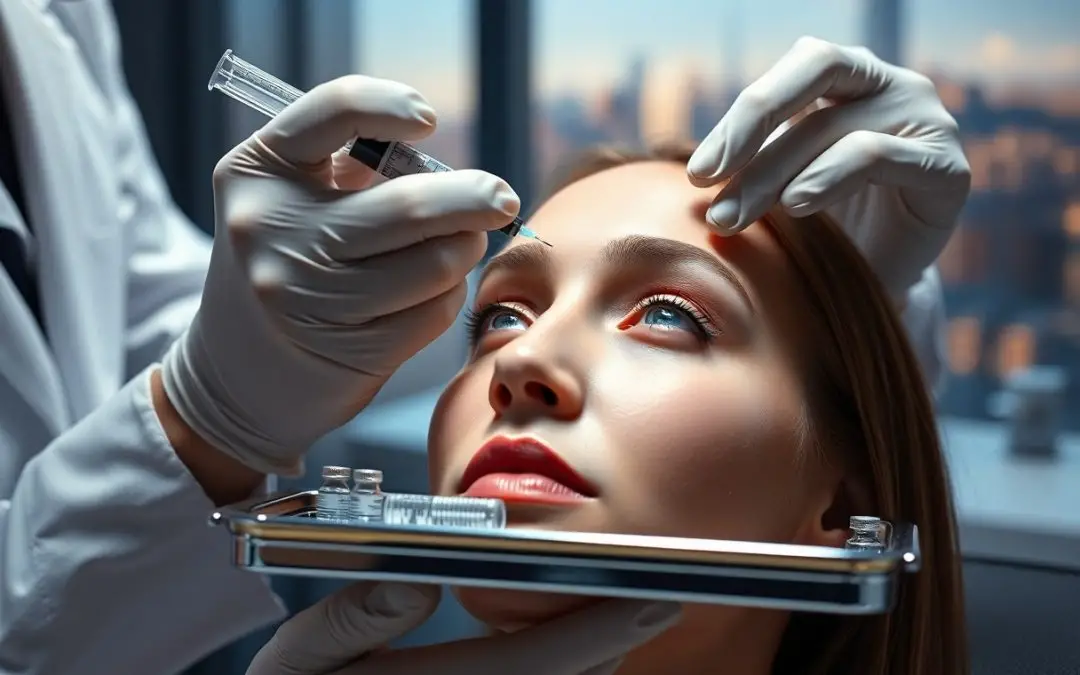
Most people who want a refreshed appearance trust experienced injectors in NYC to deliver natural-looking Botox results; you benefit from personalized assessment, precise dosing, and advanced techniques that preserve your facial expressions while softening lines. Your treatment plan should prioritize subtlety, safety, and follow-up care so you achieve harmonious, age-appropriate outcomes tailored to your anatomy and goals.
Understanding Botox
You should know Botox (onabotulinumtoxinA) is an FDA-approved neuromodulator for cosmetic use since 2002, used primarily for dynamic wrinkles; effects typically begin in 3-7 days, peak around two weeks, and last about 3-4 months. Expert injectors tailor unit dosing and injection points to preserve natural expression while softening lines.
What is Botox?
Botox is a purified form of botulinum toxin type A that temporarily blocks nerve signals to muscles. When you receive treatment, your injector uses small, measured units-commonly a 100-unit vial reconstituted for precise dosing-to target overactive muscles for aesthetic or therapeutic concerns, with well-established safety when administered by trained clinicians.
How Botox Works
Botox acts at the neuromuscular junction by inhibiting acetylcholine release from presynaptic terminals, causing targeted muscle relaxation; you’ll notice reduced dynamic creasing where muscles are treated. Typical dosing examples: glabellar lines often use ~20 units (divided across 4-5 sites), crow’s feet 6-12 units per side, and forehead 8-20 units depending on muscle strength.
More detail: your injector controls diffusion by choosing depth (intramuscular for bulk muscles, superficial for fine lines), dilution (often 100 units per 2.5 mL for common concentration), and micro-droplet technique to avoid unwanted weakness. Reinnervation occurs via axonal sprouting over roughly 3 months, which is why maintenance treatments are scheduled every 3-4 months to sustain results while minimizing total dose over time.
Choosing an Expert Injector
You should prioritize injectors who combine medical training with aesthetic judgment, since technique determines whether 10-30 units in the forehead looks natural or frozen; seek providers with board certification in dermatology/plastic surgery or master-level nurse injectors with extensive facial anatomy training and portfolios showing subtle, before-and-after progressions rather than dramatic changes.
Qualifications and Experience
You want someone with at least 3-5 years focused on facial injectables and 1,000+ documented treatments, plus ongoing CME in neuromodulators; physicians with fellowship training or injectors who publish case series and track outcomes (complication rates below 1% in audits) demonstrate the depth of skill that preserves expression while reducing lines.
Importance of Personalized Consultations
You benefit when consultations last 15-30 minutes, include dynamic facial analysis and photos, and produce a tailored plan listing target muscles, unit ranges, and follow-up timing; this prevents one-size-fits-all dosing and sets clear expectations for onset (3-7 days) and peak effect (about 2 weeks).
During consultation your injector should map muscle strength, note asymmetries, and explain staged dosing-start conservatively (for example, 10-20% lower than standard ranges) with a planned 10-20% adjustment at a two-week follow-up; clinical examples show this approach reduces overcorrection and keeps natural movement while achieving smoothing for roughly 3-4 months.
Achieving Natural Results
You and your injector map dynamic movement and tailor doses to each muscle, often using 2-4 units per injection point so forehead totals run about 10-20 units while glabellar treatments commonly approach 20 units. Effects emerge in 3-7 days and peak around two weeks, so conservative initial dosing with a scheduled follow-up avoids over-treatment and preserves natural expression while smoothing targeted lines.
Techniques for a Subtle Look
Microdosing and staged treatments help you achieve subtle change: many experts start with 1-2 unit increments and reassess at two weeks, adding only 1-4 units where needed. Precise placement-about 2-4 units per forehead point and smaller aliquots laterally-limits diffusion that causes a frozen appearance. Dynamic testing with video or mirror guidance ensures motion is preserved while specific lines are softened.
Common Mistakes to Avoid
Overcorrection and uniform dosing create unnatural results you can prevent by tailoring injections to muscle strength and asymmetry; giving >20-30 units to the forehead without assessment often leads to brow heaviness. Skipping a two-week review or applying a large catch-up dose raises complication risk. Documented mapping and conservative starts reduce these errors.
Assess frontalis strength and baseline brow position before injecting: if low forehead lines appear at rest, shift dose laterally and lower central units to preserve elevation. For example, a patient who received 30 units centrally experienced transient brow droop, whereas another treated with 8-10 central and 2-3 lateral units maintained natural movement. Plan a 2-week touch-up (typically 1-3 units) instead of an aggressive initial dose.
The Botox Procedure
During the procedure your injector analyzes dynamic muscle patterns and maps precise points, often using a 30-32 gauge needle and 0.02-0.05 mL per injection. Typical dosing ranges: 10-30 units for forehead, 15-30 units for the glabella, and 5-15 units per side for crow’s feet. You’ll feel brief pinches; the session usually takes 10-20 minutes. Initial softening appears in 3-7 days and full effect is evident by about 14 days, at which point your injector may adjust dosing if needed.
What to Expect During Treatment
You’ll have photos taken and targeted areas marked while you make expressions to identify active muscles. Common patterns use 3-5 points for the glabella and 4-6 for the forehead. Topical anesthetic or ice reduces discomfort, and most injectors work with microdroplet or serial puncture techniques. Treatments are quick-typically under 20 minutes-and minor pinpoint bleeding or slight swelling at 1-5% of sites is the most frequent short-term effect.
Aftercare and Recovery
After treatment avoid rubbing or massaging treated areas for 24 hours, stay upright for about 4 hours, and skip vigorous exercise and alcohol for 24 hours. Hold facials, peels, lasers, and dental procedures for 48-72 hours. Swelling or redness usually subsides within 24-48 hours, you’ll notice improvement in 3-7 days, and full results settle by two weeks when a follow-up assessment is typical.
If you develop bruising, apply ice for the first 24 hours then gentle warmth after 48 hours; most bruises clear in 7-10 days and topical arnica is commonly used. Contact your injector promptly for significant asymmetry or eyelid heaviness-transient ptosis is rare (≈1% or less) and often resolves over weeks to months. Schedule a two-week follow-up for touch-ups or adjustments rather than attempting self-corrections.
Cost of Botox in NYC
Prices in NYC vary widely: you’ll commonly see per-unit rates from $12-$25 and per-area fees from $300-$800. Manhattan clinics trend higher than outer-borough practices, and packages or membership plans can change effective per-treatment cost. Plan for maintenance every 3-4 months when budgeting your annual spend.
Average Pricing
You can expect common treatment examples: glabellar lines often require 20-30 units, forehead 10-30 units, and crow’s feet 6-15 units. At $15/unit, that’s roughly $300-$450 for glabellar or $150-$450 for a forehead session; some providers instead quote flat area fees of $300-$600.
- Per-unit ranges typically fall between $12 and $25 in NYC clinics.
- Flat-fee treatments for a single area commonly run $300-$600.
- Assume that package pricing and promotional rates can reduce single-treatment prices but may limit provider choice.
Factors Influencing Cost
Several variables shape what you pay: injector credentials and experience, product brand (Botox, Dysport, Xeomin), number of units needed, clinic location, and whether advanced techniques or combination treatments are used. Board-certified dermatologists or plastic surgeons often charge 20-50% more than less-experienced injectors, reflecting outcome reliability and complication management.
- Injector skill and board certification often increase fees but improve consistency of natural results.
- Product choice affects unit pricing and dosing conversions (e.g., Dysport units differ from Botox units).
- Assume that choosing a higher-skilled injector can reduce long-term costs by minimizing over-treatment and complications.
For practical comparison, if you need 30 units at $18/unit that’s $540, while an expert injector may charge $650-$800 for the same goal because refined technique can use fewer units and target muscles more effectively; you’ll also pay more for single-use vials, private-room visits, and included follow-ups, so factor those line items into your decision.
Frequently Asked Questions
Safety Concerns
If you’re concerned about safety, the injectable preparations (onabotulinumtoxinA, abobotulinumtoxinA, incobotulinumtoxinA) are FDA‑approved for cosmetic use when administered by trained injectors. You may experience temporary bruising, mild headache, or localized weakness; transient eyelid droop occurs in under 5% depending on technique. Disclose neuromuscular disease, anticoagulant use, pregnancy or breastfeeding, and prior allergic reactions so your injector can tailor dose and placement to minimize risk.
Duration of Results
Your results typically begin within 2-7 days and peak around two weeks, with most patients seeing effects for 3-4 months and some lasting 4-6 months. Product choice (Botox vs Dysport), dose, treated muscle strength, and your metabolic rate all influence longevity. For example, glabellar treatments commonly last 3-4 months while masseter reduction often persists 4-6 months.
Typical dosing ranges help set expectations: glabellar 20-30 units (onabotulinumtoxinA), crow’s feet 6-12 units per side, and masseter 20-50 units per side; higher initial doses or targeted placement can extend duration. You can plan maintenance every 3-4 months, and with repeated treatments many patients can slowly lengthen intervals as muscle activity decreases-assess results at two weeks to determine any touch‑up needs.
Final Words
As a reminder, when you choose Botox in NYC with expert injectors, you get tailored treatments that prioritize subtle, natural-looking results, precise dosing, and detailed aftercare to preserve facial expression while smoothing lines; trust your injector’s experience, ask targeted questions, and follow post-care guidance to maximize safety and lasting, natural outcomes.